To safeguard your memories and important data, you should convert obsolete media like VHS tapes and floppy disks into digital formats such as MP4 or DVD. Professional services or DIY kits can help you do this easily, ensuring your media is protected from decay and environmental damage. Digital copies are easier to access, organize, and share, and they last much longer. Keep exploring how you can preserve your digital legacy for the future.

Prime made for students and young adults
- Fast, free delivery for dorm and study essentials
- Prime Video and Amazon Music included
- Member-only deals
Key Takeaways
- Convert VHS tapes and floppy disks to digital formats to prevent data loss from media deterioration.
- Use professional or DIY media conversion services to ensure high-quality, accessible digital copies.
- Store digital files securely on cloud or external drives for easy access and long-term preservation.
- Recognize the risks of outdated formats, including magnetic decay and device obsolescence, and act proactively.
- Future-proof your media by digitizing valuable content, safeguarding memories, and ensuring compatibility with modern technology.
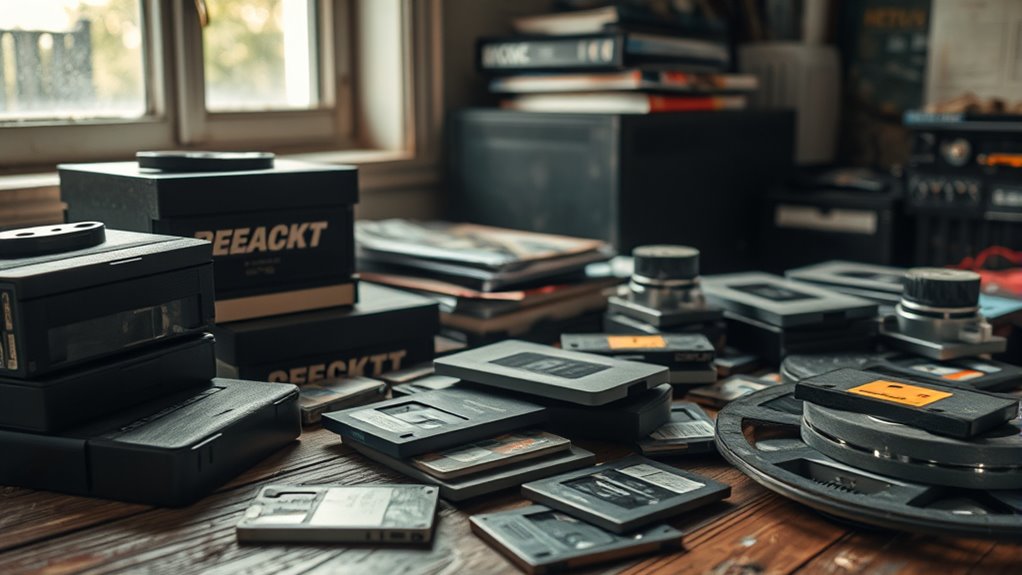
Once the pinnacle of home entertainment and data storage, VHS tapes and floppy disks have become relics of a bygone era. As time progresses, these obsolete media formats pose a risk of losing valuable memories and critical information forever. You might find yourself with boxes of old tapes and disks, wondering how to guarantee they’re not lost to decay or technical obsolescence. That’s where digital preservation and media conversion come into play. Converting your VHS tapes and floppy disks into digital formats helps secure your data against deterioration and makes it accessible across modern devices. Media conversion offers an efficient way to transfer analog video and magnetic storage content into digital files that can be stored, shared, and enjoyed easily.
Digital preservation isn’t just about backing up files; it’s about ensuring the longevity of your media. Magnetic tapes and disks are prone to degradation, such as mold, warping, or magnetic loss, which can corrupt your data over time. By converting these formats into digital files, you create a stable, high-quality copy that’s less susceptible to environmental damage. You can then store these files on cloud services, external drives, or other digital media, protecting your memories and important information from fading away. This process not only preserves your data but also makes it compatible with current technology, eliminating the need for outdated playback devices. Additionally, employing proper storage conditions can greatly extend the lifespan of your digital copies and original media.
Media conversion services have made it easier than ever for you to digitize your old media. Professional conversion companies use specialized equipment to transfer VHS tapes to digital files, often offering options like DVD, MP4, or other common formats. For floppy disks, tools are available that read the magnetic data directly and save it onto a computer. While some enthusiasts choose to do it themselves with DIY kits, professional services tend to provide higher quality results and faster turnaround times. Once your media is converted, you gain the flexibility to organize, edit, and share your content without the limitations imposed by aging formats.
Ultimately, taking the step to digitize your obsolete media guarantees that your cherished memories and essential data won’t be lost to time. It’s a proactive approach to digital preservation that future-proofs your collection. Whether you’re saving family videos, old projects, or important documents stored on floppy disks, media conversion offers a practical solution to bridge the gap between past and present. By embracing this process, you’re safeguarding your history, making it accessible for years to come, and ensuring that the value of your media isn’t lost in the shuffle of technological change.
Frequently Asked Questions
How Can I Restore Data From Damaged Floppy Disks?
To restore data from damaged floppy disks, you should start with data recovery tools designed for disk recovery. Carefully clean the disk and use specialized disk repair software to fix minor issues. If the damage is severe, consider consulting a professional data recovery service. They can often retrieve data from physically damaged disks using advanced techniques, ensuring you recover as much information as possible with minimal risk of further damage.
Are There Modern Devices Compatible With Vintage VHS Players?
You’ll find that modern compatibility options like VHS player adapters make reconnecting with vintage VHS players easier than ever. These adapters bridge the gap between old technology and new devices, allowing you to digitize and preserve your tapes effortlessly. While dedicated devices are rarer, many multi-input media converters support VHS players, making it simple to enjoy your cherished videos on contemporary screens. Embrace these tools to keep your memories alive with minimal hassle.
What Are the Best Methods to Digitize Old Media Collections?
To digitize your old media collections, you should use digital archiving and preservation techniques. Connect your VHS or floppy disk player to a video capture device or computer with an appropriate interface. Use reliable software to record and save the footage digitally. Regularly back up your files, and consider converting analog formats to multiple digital copies for long-term preservation. This safeguards your memories stay safe and accessible.
How Do I Identify the Age and Origin of Obscure Media Formats?
To identify the age and origin of obscure media formats, start with media format identification by examining physical features, labels, and markings. Use online databases and forums dedicated to media history to trace media origin. You can also compare your media to known formats and consult experts or archivists for insights. This approach helps you pinpoint specific details, making media origin tracing more accurate and efficient.
Can Obsolete Media Be Safely Recycled or Environmentally Disposed Of?
You can recycle obsolete media safely and responsibly by following e-waste recycling guidelines, ensuring hazardous materials are managed properly. Always check local regulations, use certified e-waste recycling centers, and avoid discarding media with hazardous components in regular trash. By doing this, you protect the environment, prevent hazardous material leaks, and contribute to sustainable waste management. Remember, responsible disposal helps reduce environmental impact and promotes safer recycling practices.
Conclusion
As you navigate the shift from VHS tapes to floppy disks, remember that about 90% of digital data is lost within a decade if not properly preserved. It’s essential to adapt your storage methods and digitize important media before it’s too late. Don’t let valuable memories and information fade away—embrace new technologies to safeguard your history. Staying proactive ensures your media remains accessible long into the future.
Halloween Picks
halloween
As an affiliate, we earn on qualifying purchases.