
TL;DR

Prime made for students and young adults
- Fast, free delivery for dorm and study essentials
- Prime Video and Amazon Music included
- Member-only deals
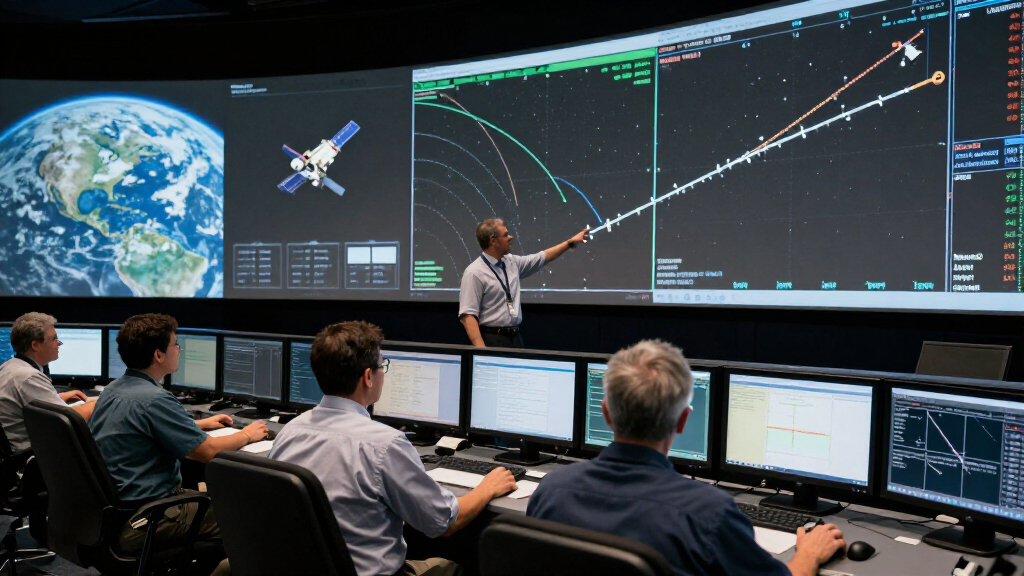
NASA’s planned commercial effort to raise the orbit of the Neil Gehrels Swift Observatory ended without a boost after the LINK spacecraft developed intermittent communications and orientation-control problems. NASA and contractor Katalyst Space shifted to technology demonstrations before NASA concluded its involvement on Sept. 3; LINK re-entered Earth’s atmosphere on Sept. 25. The agency says the compressed effort offered lessons for future spacecraft-servicing missions.
NASA’s commercial effort to raise the orbit of its Neil Gehrels Swift Observatory ended without a boost after the servicing spacecraft, LINK, developed communications and orientation-control problems. NASA and contractor Katalyst Space scaled back the mission to technology demonstrations, and NASA says the attempt produced experience that may inform future commercial servicing work.
NASA contracted with Katalyst Space, a Flagstaff, Arizona-based company, in September 2025 to design, build, test and launch a satellite that would meet Swift, grapple it and lift it to a higher orbit. LINK launched from Kwajalein Atoll in the Republic of the Marshall Islands in July 2026 aboard a Northrop Grumman Pegasus XL rocket. NASA said Katalyst selected the rocket based on the observatory’s orbit and the mission’s compressed schedule.
After reaching space and completing initial checks, LINK began suffering intermittent communications losses and problems with its orientation control. NASA and Katalyst worked around the clock to troubleshoot. They then agreed LINK would not attempt to capture or boost Swift. Instead, the spacecraft was to exercise its xenon-powered propulsion system and three robotic arms, which were designed to offer flexibility in grappling the observatory. NASA formally ended its involvement on Sept. 3, and LINK re-entered Earth’s atmosphere on Sept. 25.
NASA’s account describes the effort as a high-risk attempt shaped by time pressure. The agency had only months to solicit proposals and fund design studies before awarding the contract. Katalyst had about a year to prepare LINK for launch. NASA also said Swift’s controllers changed the observatory’s observing plan to reduce atmospheric drag: in December 2025, they began replacing about 25% of science targets with lower-drag orientations, switching entirely to that approach by February. The supplied report says Swift did not conduct pointed science observations from mid-February to late August, but its final account of those operations is cut off.
A Test for Commercial Servicing
The outcome means Swift did not receive the orbit raise that NASA had sought to extend its time in low Earth orbit. The agency said projections put the observatory’s arrival at an altitude where a boost would become increasingly difficult—about 185 miles (300 kilometers)—in fall 2026. The planned intervention was a time-sensitive effort to preserve an operating science mission, not a routine maintenance flight.
NASA says the attempt also tested how it and a commercial partner could move from concept to launch under an unusually short schedule, coordinate decisions and accept risk. Those are lessons the agency says could benefit later in-space servicing programs. Katalyst’s CEO described LINK as a foundation for further work, but the available report does not establish that the demonstrations achieved particular technical results or that a future mission will use them.
Swift’s scientific record adds weight to the missed boost. Launched in November 2004, the observatory was designed to study gamma-ray bursts and has spent more than two decades observing cosmic explosions, black-hole flares, comets and asteroids. The source material does not say that Swift’s mission ended when the boost attempt concluded; it says the observatory was expected to face re-entry without intervention by year’s end.
Why Swift Needed a Boost
Spacecraft in low Earth orbit encounter drag from the upper atmosphere. That drag gradually lowers their altitude, particularly for spacecraft without propulsion systems to counter it. NASA said a period of increased solar activity magnified the atmospheric drag affecting Swift, accelerating the urgency of considering an orbit boost.
NASA’s timeline combined a long-running science mission with a rapid engineering effort. While Katalyst prepared LINK, controllers at Swift’s Mission Operations Center at Penn State adjusted the observatory’s schedule to limit drag. NASA’s Space Science Mission Operations team and Katalyst developed milestones and approval processes intended to support fast decisions, while the NASA Engineering and Safety Center provided input during integration and testing.
“While we did not accomplish every objective we set out to achieve, in less than a year we went from mission concept to launching and operating the first commercial space robot. This is a foundation we can build on.”
— Ghonhee Lee, Katalyst Space CEO
Demonstration Results Remain Unclear
The supplied NASA report does not state whether LINK completed its planned propulsion and robotic-arm demonstrations, or provide performance data from them. It also does not detail which specific communications or orientation-control faults occurred, what caused them, or whether they could have been resolved within the mission’s remaining time. No future servicing mission, schedule or funding commitment is identified in the material.
The source excerpt ends during a statement about Swift’s operations from mid-February to late August. It therefore does not provide the full description of what the observatory accomplished during that period, its status after August, or a revised estimate for its eventual re-entry. NASA’s earlier projection placed Swift’s fall to the difficult-to-boost altitude in fall 2026; the excerpt does not give an updated orbital forecast.
NASA’s Next Servicing Steps
NASA said it is capturing lessons learned from the LINK effort. The agency’s report does not announce a replacement boost attempt or name a next milestone for Swift. The next concrete developments to watch are any fuller NASA account of the technology demonstrations and any agency plans that apply the experience to future commercial servicing missions.
For Swift, the available information leaves its near-term operating plans and re-entry timing unresolved. NASA’s reported fall 2026 altitude projection explains why the agency pursued the boost, but the excerpt does not confirm when the observatory will cease operating or re-enter.
Key Questions
Did NASA and Katalyst raise Swift’s orbit?
No. The LINK spacecraft did not boost Swift; NASA and Katalyst dropped the planned grapple and lift after LINK developed communications and orientation-control problems.
What happened to the LINK spacecraft?
NASA ended its involvement in the mission on Sept. 3, 2026. LINK re-entered Earth’s atmosphere on Sept. 25, according to NASA.
Did LINK complete its technology demonstrations?
The source says the revised mission was to attempt demonstrations of its xenon-powered propulsion system and three robotic arms. It does not report whether those demonstrations were completed or give results.
Why did NASA seek to boost Swift?
Atmospheric drag was lowering Swift’s orbit, with increased solar activity magnifying the effect. NASA projected Swift would reach an altitude of about 185 miles (300 kilometers), where boosting would become increasingly difficult, in fall 2026.
Does the report say Swift’s science mission has ended?
No. The source describes the boost effort’s conclusion and says Swift was expected to re-enter by year’s end without intervention. It does not confirm that Swift’s mission had ended or provide a current operating status.
Source: primary
Halloween Picks
halloween
As an affiliate, we earn on qualifying purchases.