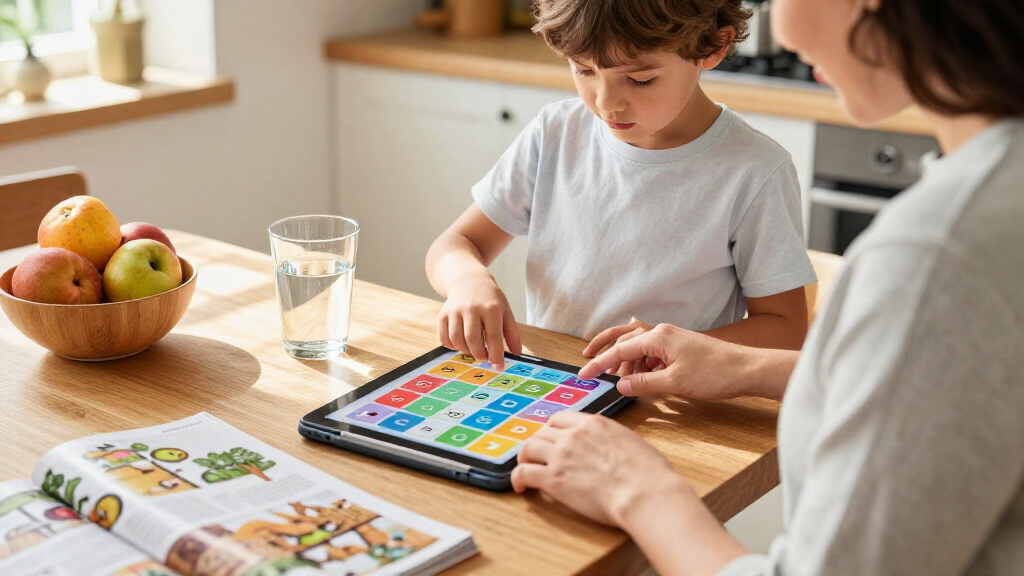
The best language learning tablets for kids make hearing and practicing another language feel like play, but they vary widely in age fit, language coverage, and how much guidance they offer. I’d put the LeapFrog LeapPad Academy first for families who want a fuller digital learning experience, while the VTech Genio Bilingual JuniorBook is a stronger fit for simple English-Spanish practice and the Dex Language Learning Camera stands out for its 16-language range. Screen-free talking-card models can suit younger children, though they depend more on repetition and an adult’s involvement. Read on for the full breakdown of which format makes sense for your child and household.

Prime made for students and young adults
- Fast, free delivery for dorm and study essentials
- Prime Video and Amazon Music included
- Member-only deals
Key Takeaways
- The lineup splits into two distinct formats: LeapFrog’s LeapPad Academy is the dedicated screen-based tablet, while most other picks use buttons, sounds, or talking cards without a conventional screen.
- Language breadth is not the same as depth: the Dex camera lists 16 languages, while bilingual and trilingual toys may be easier to use for focused English-Spanish or short-term multilingual exposure.
- Talking cards add structure: JoyCat, Think Academy, and Qiaojoy options pair audio with physical prompts, but card count and language pairing differ, so check the set’s actual contents.
- Toddler picks prioritize sensory play: the screen-free toys for ages 1–3 emphasize music, lights, and simple interaction rather than a more structured lesson sequence.
- Similar product names can hide different kits: the two Peacurh trilingual listings and multiple Qiaojoy and JoyCat models have different descriptions or card counts, making exact model details more useful than brand alone.


| language learning tablets for kid | Age range | Languages |
|---|---|---|
| VTech Genio Bilingual JuniorBo | 5 years and up | English and Spanish |
| Peacurh Trilingual Learning Ta | 12 months to 3 years | English, Spanish, and French |
| Screen-Free Bilingual Learning | 12 months and up | English and Spanish |
| HAIOUMM Bilingual Educational | 5 years and up | Spanish and English |
| JoyCat Kids Learning Tablet wi | 24 months to 5 years | — |
| Think Academy Screen-Free Inte | — | — |
| Qiaojoy Bilingual Kids Learnin | — | — |
| Peacurh Trilingual Learning Ta | — | — |
| Screen-Free Toddler Learning T | — | — |
| LeapFrog LeapPad Academy Kids’ | — | — |
| Dex Language Learning Camera f | 3–8 years | 16 languages; 30+ dialects |
| Qiaojoy Bilingual Screen-Free | 24 months to 12 years | English and Spanish |
| JoyCat Bilingual Kids Learning | 24 months–7 years | English and Spanish |
| hahaland 5-Language Learning T | 12 months–3 years | English, French, Spanish, German, Italian |
More Details on Our Top Picks
VTech Genio Bilingual JuniorBook Learning Laptop for Kids
The VTech Genio JuniorBook is the strongest fit here for children ready to use a keyboard while building English and Spanish familiarity. Its 80-plus offline apps put language activities alongside other school subjects, and the full-size QWERTY keyboard gives it a more computer-like role than JoyCat’s card-insertion format. Because activities work without internet access, children can use it without needing downloads or a connected device.
The tradeoff is a fixed library: unlike a tablet built around replaceable learning materials, its content cannot be expanded with downloads. It also runs on four AA batteries, which will need replacing with regular use. At 1.9 pounds, it is less of a toddler-friendly grab-and-go toy than the lighter Peacurh tablet. I’d choose it for a child around age five or older who wants structured bilingual practice and basic computer interaction, not for a family seeking fresh content over time.
Pros:- English and Spanish are available across more than 80 offline educational apps and games.
- Full-size QWERTY keyboard supports early computer familiarity alongside language practice.
- Left- and right-hand cursor controls offer flexible handling.
- Works without an internet connection.
Cons:- The preloaded activities cannot be expanded with downloads or internet updates.
- Four AA batteries need replacement after regular use.
- At 1.9 pounds, it is less suited to very young children or travel than a lightweight toy.
Best for: Families with children age five and up who want offline English-Spanish activities plus early keyboard and cursor practice.
Not ideal for: Parents seeking downloadable lessons, expanding language content, or a lightweight toy for a toddler; the activity library is fixed and the laptop needs AA batteries.
- Brand:VTech
- Model number:80-581230
- Age range:5 years and up
- Languages:English and Spanish
- Activities:More than 80 preloaded educational apps and games
- Power:4 AA batteries; included batteries are for demonstration
- Dimensions:11.3 x 7.5 x 1.4 inches
- Weight:1.9 pounds
Our verdict“Choose the VTech for an older child who wants an offline bilingual learning laptop with real keyboard interaction, and skip it if you need expandable content.”
Peacurh Trilingual Learning Tablet Toy with Music and Sounds
For the youngest language learners, the Peacurh makes a simple case for hearing English, Spanish, and French during everyday play. Its 39 icons pair spoken words with sounds, while learning, quiz, music, and pretend-play modes give caregivers a few different ways to keep the toy in rotation. That makes it a broader language sampler than RIANEAN’s English-Spanish-only tablet, though both are aimed at toddlers rather than independent readers.
The large icons and lightweight plastic body suit small hands, but the experience is intentionally basic: it introduces words and topics rather than offering a deeper language curriculum. Its stated age range is just 12 months to 3 years, so families should expect to move on as a child grows. I’d pick this over the VTech laptop for a baby or young toddler who benefits from short, tactile play; older children are likely to want more varied activities and interaction.
Pros:- Introduces spoken words in English, Spanish, and French.
- Four modes include learning, quiz, music, and pretend play.
- 39 sound-producing icons give toddlers simple touch-based interaction.
- Lightweight design and large icons suit small hands.
Cons:- Plastic toy construction offers a simpler experience than the VTech JuniorBook’s keyboard-based activities.
- The age range is limited to 12 months through 3 years.
- The listed topics and modes provide introductory exposure, not a structured language course.
Best for: Caregivers of children 12 months to 3 years who want casual spoken-word exposure in English, Spanish, and French.
Not ideal for: Families looking for lessons that grow with a preschooler or school-age child; this is a simple toddler toy with a stated age range ending at 3 years.
- Brand:Peacurh
- Model:35847M
- Age range:12 months to 3 years
- Languages:English, Spanish, and French
- Play modes:Learning, quiz, music, and pretend play
- Number of icons:39
- Material:Plastic
- Safety details:BPA-free with smooth, rounded edges
Our verdict“Pick the Peacurh for a toddler’s playful first exposure to three languages, not for sustained lessons as the child gets older.”
Screen-Free Bilingual Learning Tablet Toy for Toddlers Ages 1–3
RIANEAN is the pick for caregivers who want English-Spanish audio without a working screen. The colorful decal gives the toy a tablet-like look, while touch controls, lights, and quiz prompts provide simple ways for a toddler to hear and respond to early words and topics. Compared with the Peacurh, it covers only two languages rather than three, but its non-slip surface and rounded edges are specifically suited to little hands and travel activities.
That screen-free design has a clear limit: the decal is decorative, so children expecting a visual display will not find one. The toy also uses lights and audio, which may feel stimulating for some children, and its six music pieces are a modest selection. For families wanting a quiet, low-stimulation option, JoyCat’s card-based tablet may be a better match; RIANEAN makes more sense for toddlers who enjoy touch prompts and short bursts of sound during trips.
Pros:- English and Spanish audio introduces early words and topics without a functional screen.
- Touch controls and quiz prompts invite simple participation.
- Rounded edges and a non-slip surface are designed for toddler handling.
- Travel-friendly screen-free format can offer an alternative to videos.
Cons:- The colorful decal is not a real screen, which may disappoint children expecting visual content.
- Lights and audio may be stimulating for some children.
- Offers English and Spanish only, unlike the Peacurh’s three-language selection.
Best for: Caregivers of toddlers who want a compact, screen-free English-Spanish activity for travel and early topic exposure.
Not ideal for: Families whose child needs a functional display, is sensitive to lights or sound, or would benefit from French as well as English and Spanish.
- Brand:RIANEAN
- Age range:12 months and up
- Languages:English and Spanish
- Screen:No functional screen; colorful decorative decal
- Features:Lights, touch controls, and quiz modes
- Music:6 music pieces
- Design details:Rounded edges and non-slip surface
- Included components:1 kid tablet
Our verdict“Choose RIANEAN for a toddler-friendly, screen-free English-Spanish travel toy if lights and audio suit your child.”
HAIOUMM Bilingual Educational Laptop for Kids, Spanish and English, 120 Learning Modes, Dinosaur Design
HAIOUMM stands out for families who want a wider menu of bilingual activities in a laptop format. Its 120 learning modes span letters, math, animals, music, and games, while multiple activity levels add a practice-and-test rhythm for children age five and up. Compared with the VTech JuniorBook, HAIOUMM offers a stated higher mode count and a 4.3-inch color display with a mouse; VTech, by contrast, specifies more than 80 offline apps and a full-size QWERTY keyboard.
The choice comes down to interaction style and the information provided: HAIOUMM’s included mouse and color display may appeal to children who want a more visual laptop experience, while VTech makes its keyboard and offline use especially clear. HAIOUMM is still a plastic educational toy rather than a full computer, and the protective film needs removal before use. I’d choose it for a child who enjoys varied, level-based activities, but not for parents who need detailed assurances about connectivity or content expansion.
Pros:- Offers 120 English-Spanish learning activities across subjects and games.
- Multiple activity levels add progression from practice to testing.
- Includes a 4.3-inch color display, laptop-style keyboard, and mouse.
- Dinosaur cover gives the laptop a kid-oriented design.
Cons:- Plastic construction may not suit buyers seeking a more substantial computer device.
- Protective film must be removed before first use.
- Unlike the VTech JuniorBook, the supplied details do not specify offline use or content updates.
Best for: Families with children age five and up who want varied English-Spanish activities, a color display, and mouse-based interaction.
Not ideal for: Parents seeking a full computer, expandable online lessons, or a product with clearly specified offline operation; this is a fixed educational toy.
- Brand:HAIOUMM
- Age range:5 years and up
- Languages:Spanish and English
- Learning modes:120
- Display:4.3-inch TFT color display
- Included components:Kids laptop, manual, and mouse
- Material:Plastic
- Design:Dinosaur cover
Our verdict“Choose HAIOUMM if your school-age child prefers a colorful, level-based bilingual activity laptop, and skip it if you need a full computer or expandable lessons.”
JoyCat Kids Learning Tablet with 156-Page Talking Phonics Flash Cards
JoyCat puts phonics and spoken vocabulary ahead of broad bilingual exposure. Children insert one of the 156 card pages and tap its red circle to hear words, then use interactive games to practice letters, short vowels, math, and songs. The audio uses a standard American accent, giving families a clear pronunciation model. Compared with RIANEAN’s touch-and-light toy, JoyCat offers more structured card-based practice; unlike the VTech JuniorBook, it does not present itself as an English-Spanish learning device.
Its screen-free format suits preschoolers who benefit from hands-on materials, but it asks the child to manage a small sequence—insert a card, find the circle, then listen. That can be less immediate than tapping an icon on the Peacurh tablet, and the supplied information does not list Spanish-language audio. With 156 pages, more than 40 themes, and over 100 games, it offers plenty of variety within its stated age range of two to five. Choose it for early literacy, not for families whose main goal is bilingual instruction.
Pros:- 156 card pages cover phonics, letters, short vowels, math, words, and songs.
- Audio provides spoken examples in a standard American accent.
- More than 100 interactive games add practice beyond listening to cards.
- Screen-free card handling supports hands-on preschool activities.
Cons:- The child must insert a card and tap its red circle to hear audio.
- The described audio is not presented as bilingual, unlike the VTech and HAIOUMM laptops.
- The stated age range ends at five years.
Best for: Families with children ages two to five who want screen-free English phonics, vocabulary, and early math practice using audio cards.
Not ideal for: Parents specifically seeking Spanish-English lessons or a toddler toy with one-touch audio; JoyCat’s described content centers on English and requires card placement.
- Brand:JoyCat
- Model:LT-KLP-01
- Age range:24 months to 5 years
- Flash cards:156 pages
- Themes:More than 40
- Words:More than 600
- Interactive games:More than 100
- Audio accent:Standard American
- Included components:Charging cable, kids learning pad, and talking flash cards
Our verdict“Choose JoyCat for preschool phonics and English vocabulary practice through talking cards, not when bilingual audio is the main requirement.”
Think Academy Screen-Free Interactive Learning Pad with Flash Cards for Kids
The Think Academy Learning Pad X100 suits families who want structured preschool practice without a screen. Its three modes—Exploration, Game, and Hints—let children approach the included cards at different levels of support, while voice prompts make phonics, shapes, numbers, and logic more interactive than a stack of cards alone. Compared with the Qiaojoy Bilingual Kids Learning Pad, this one focuses on broad early-learning skills rather than English-Spanish vocabulary practice. That makes it a stronger match for a child building foundational concepts, but a weaker choice for families specifically seeking a second language. The wipe-clean cards and rounded ABS frame suit repeated handling; the tradeoff is that activities depend on the physical cards, and much of the content may feel preschool-focused to older children within its stated age range.
Pros:- Three play modes offer different levels of guidance and challenge.
- Covers phonics, shapes, numbers, logic, and other foundational topics.
- Voice prompts and sound effects add feedback without a screen.
- Rounded ABS construction and wipe-clean flash cards suit frequent handling.
Cons:- Activities require the included physical flash cards rather than working independently.
- Content is centered on preschool skills and may not hold the interest of older children.
Best for: Caregivers of preschoolers who want voice-guided practice across phonics, numbers, shapes, and logic without adding screen time.
Not ideal for: Families prioritizing bilingual vocabulary or children seeking advanced content; the activities rely on physical cards and focus mainly on early skills.
Our verdict“Choose the Think Academy pad for guided, screen-free preschool skill practice, not for dedicated bilingual lessons.”
Qiaojoy Bilingual Kids Learning Pad with Talking Flash Cards, Pink
For families making English and Spanish vocabulary the main goal, the Qiaojoy AC52 offers a more direct language-learning setup than the broader-skills-focused Think Academy Learning Pad X100. Its 20 PVC cards contain 40 lesson pages, with activities spanning letters, numbers, animals, vehicles, emotions, sounds, facts, quizzes, and interactive questions. The listed 1,000+ words and 100+ games point to variety within the card-based format, while the language switch supports practice in either language. Compared with the Peacurh Trilingual Learning Tablet Toy, Qiaojoy uses physical cards instead of a fixed set of tablet icons, giving lessons a more tactile structure. The tradeoffs are that its power source is not specified in the product data and its volume has only two levels, which may limit convenience in quiet rooms or shared spaces.
Pros:- Teaches English and Spanish with a language switch.
- Twenty durable PVC cards provide 40 lesson pages across varied themes.
- Combines vocabulary, sounds, facts, quizzes, and interactive questions.
- Screen-free format supports hands-on language practice.
Cons:- Product information does not specify whether it uses batteries or a rechargeable power source.
- Two volume levels offer limited adjustment for different rooms and listening preferences.
Best for: Families with toddlers or preschoolers who want tactile English-Spanish vocabulary activities organized around themed cards.
Not ideal for: Buyers who need a clearly specified power setup, fine-grained volume control, or lessons in more than two languages.
Our verdict“Pick Qiaojoy for card-based English-Spanish practice, especially if tactile lessons matter more than a clearly documented power setup.”
Peacurh Trilingual Learning Tablet Toy with Music and Sound
The Peacurh tablet is the simplest fit here for introducing English, Spanish, and French through short, icon-led activities. Its 39 buttons cover familiar subjects such as letters, colors, numbers, animals, vehicles, instruments, fruits, and dates, while learning, quiz, music, and pretend-play modes give young children several ways to interact. Compared with the Qiaojoy Bilingual Kids Learning Pad, Peacurh adds French and avoids separate flash cards, making it easier to pick up for quick practice or travel. Qiaojoy, by contrast, offers physical lesson pages and a stated vocabulary count, which may suit families seeking more structured word practice. Peacurh’s lightweight, rounded BPA-free design is a practical advantage for small hands, but its lessons remain limited to the words and topics programmed into the icons; pretend play also uses tablet-style buttons rather than a screen.
Pros:- Introduces content in English, Spanish, and French.
- Four modes include learning, quizzes, music, and pretend play.
- Thirty-nine interactive icons cover familiar early-learning subjects.
- Lightweight BPA-free plastic construction with smooth, rounded edges suits small hands and travel.
Cons:- Language practice is limited to the words and topics programmed into the icons.
- Pretend-play activities use tablet-style icons rather than a screen-based interface.
Best for: Families seeking a lightweight first language toy for a toddler or preschooler, especially when French alongside English and Spanish is useful.
Not ideal for: Children who need extensive vocabulary lessons, card-based activities, or language content beyond the tablet’s fixed icons.
Our verdict“Choose Peacurh for portable, three-language introductions, but choose a flash-card system for deeper guided vocabulary practice.”
Screen-Free Toddler Learning Tablet Toy with Music, Lights, and Five Languages
This Yeeammk toy is aimed squarely at the youngest learners: its stated 12-month-to-3-year age range, lights, music, animal sounds, and pretend phone effects lean toward playful exploration rather than longer lessons. English, Spanish, German, French, and Italian give it the broadest language selection among these picks, while four modes and ten number buttons add simple ways to revisit colors, words, weather, and time. Compared with the Peacurh Trilingual Learning Tablet Toy, Yeeammk adds two languages and is tailored to toddlers, while Peacurh covers a broader age span and includes more topic icons. The compact, screen-free format is convenient for short trips, but families need to supply three AA batteries, and the sound-and-light approach may offer less structured language practice than Qiaojoy’s talking flash cards.
Pros:- Introduces words across English, Spanish, German, French, and Italian.
- Four modes combine music, number, color, and cognition activities.
- Lights, animal sounds, quizzes, and an ABC song encourage short interactive play.
- Compact, screen-free design has rounded edges and a smooth, non-slip surface.
Cons:- Requires three AA batteries, which are not included.
- Toddler-focused play may offer less structured language practice than Qiaojoy’s card-based lessons.
Best for: Caregivers of children under three who want brief, playful exposure to several languages during travel or everyday play.
Not ideal for: Families seeking detailed flash-card lessons, older-child content, or a toy that is ready to use without buying batteries separately.
Our verdict“Choose this toy for playful five-language exposure for toddlers, provided you are comfortable supplying batteries and keeping lessons informal.”
LeapFrog LeapPad Academy Kids’ Learning Tablet, Green
The LeapPad Academy is the outlier in this group: unlike the screen-free Think Academy and Qiaojoy pads, it uses a 7-inch shatter-safe screen and more than 20 learning apps. That makes it better suited to families who want language practice alongside reading, math, writing, coding, problem-solving, and creativity, rather than a dedicated multilingual toy. Its stylus, kickstand bumper, parental controls, and rechargeable battery support longer, more varied sessions than icon- or card-led options such as the Peacurh Trilingual Learning Tablet Toy. The tradeoff is a move away from screen-free play, and the product data does not specify a particular set of language lessons. Additional games and media are sold separately, while expanded LeapFrog Academy content requires a subscription after the included three-month trial, so families should factor ongoing content access into the decision.
Pros:- Includes more than 20 educator-approved apps across reading and other learning areas.
- Shatter-safe 7-inch screen pairs with a removable bumper and built-in kickstand.
- Parental controls allow caregivers to manage apps and set time limits.
- Rechargeable battery, stylus, USB Type-C cable, and wall adapter are included.
Cons:- Uses a screen, unlike the dedicated screen-free options in this roundup.
- The product data does not identify specific bilingual or multilingual language lessons.
- Additional games and media are sold separately, and expanded Academy content requires a subscription after the trial.
Best for: Families with children ages 3–8 who want one rechargeable device for app-based learning across several school-readiness subjects, including reading.
Not ideal for: Caregivers seeking a screen-free or explicitly multilingual language toy, or buyers who want all expanded app content included without a later subscription.
Our verdict“Choose LeapPad Academy for a broader app-based learning device, not if your priority is screen-free or clearly specified multilingual practice.”
Dex Language Learning Camera for Kids, Ages 3–8, 16 Languages, Red
Dex makes language practice part of noticing the world: its camera identifies objects, then offers words, sentences, questions, and stories across 16 languages and more than 30 dialects. Adjustable learning levels give it more room to grow than the card-based JoyCat Bilingual Kids Learning Tablet, which keeps lessons tied to its included flash cards. Wi-Fi use does not require an LTE plan, and built-in content filters, no ads, and privacy settings make the connected format more child-focused than an open-access device.
The tradeoff is ongoing access: LTE requires an optional plan, and making custom stories also requires a plan. Some dialects are still in beta, so families should check whether their target variety is supported. At 7.2 ounces with a 2.1-inch screen, it is designed to be carried and used briefly, not to replace a larger tablet or a full language course.
Pros:- Connects real-world objects with vocabulary, sentences, questions, and stories.
- Offers 16 languages, more than 30 dialects, and adjustable learning levels.
- Works over home Wi-Fi without requiring an LTE plan and includes built-in content filters.
- Photos are not stored, and voice recordings are not saved unless enabled.
Cons:- Continued LTE connectivity requires an optional plan.
- Creating custom stories requires the optional Dex plan.
- Some dialects are in beta, which may limit usefulness for families seeking a specific variety.
Best for: Families with children ages 3–8 who want object-based vocabulary practice across several languages and may use the camera away from home.
Not ideal for: Families who want a fully offline device with every feature included, or who need a particular dialect that may still be in beta.
- Age range:3–8 years
- Languages:16 languages; 30+ dialects
- Camera:13 MP
- Screen:2.1 inches
- Connectivity:Wi-Fi, LTE (eSIM), Bluetooth
- Battery and charging:Included lithium-ion battery; USB-C fast charging
- Weight:7.2 ounces
- Privacy:Photos are not stored; voice recordings are not saved unless enabled
Our verdict“Choose Dex for flexible, camera-based language practice, but skip it if you want every feature to work without optional connectivity or plan costs.”
Qiaojoy Bilingual Screen-Free Learning Tablet with 20 Talking Flash Cards
Qiaojoy keeps bilingual practice tactile and straightforward: children use 20 double-sided cards covering 40 themes, with English and Spanish audio, facts, sounds, and quizzes. That makes it a better fit for families who want a simple routine around vocabulary and listening than the camera-based Dex Language Learning Camera, whose object recognition and connectivity offer broader interaction but more setup and optional-plan considerations. The two quiz levels also give caregivers a way to move beyond just hearing a word.
The card format is the main limitation as well as the appeal: lessons stay within the supplied cards, unlike Dex’s camera-led object prompts or the larger 106-card set from JoyCat. The stated age range extends from 24 months to 12 years, but the content is centered on foundational themes, so older children may outgrow it. Cards are PVC, and two volume levels leave little room for fine sound adjustment.
Pros:- Provides English and Spanish audio for screen-free vocabulary and listening practice.
- Double-sided cards cover 40 themes, including letters, numbers, animals, and colors.
- Includes word learning, sound, fact, and quiz modes.
- Two quiz levels offer a simple way to vary practice.
Cons:- Learning content is limited to the 20 included PVC cards.
- Only two volume levels are listed, restricting sound adjustment.
- The broad stated age range may overstate the appeal of foundational card topics for older children.
Best for: Caregivers of toddlers and early learners who want English-Spanish vocabulary practice without a screen or internet connection.
Not ideal for: Families seeking broad language choices, expandable lessons, or a precise volume setting; the content is limited to the supplied cards and two volume levels.
- Brand and model:Qiaojoy AC52
- Age range:24 months to 12 years
- Languages:English and Spanish
- Learning cards:20 double-sided PVC cards
- Lesson pages:40
- Themes:40
- Learning modes:Word learning, language switch, amazing sounds, basic quizzes, advanced quizzes
- Volume control:Two levels
- Warranty:1 year
Our verdict“Pick Qiaojoy for simple, screen-free English-Spanish practice with toddlers, but choose a larger card set or camera-based option for broader content.”
JoyCat Bilingual Kids Learning Tablet with 106 English-Spanish Talking Cards
JoyCat offers the broadest included card library in this group, with 106 talking cards across more than 40 themes for English-Spanish vocabulary, pronunciation, and listening. Its 20 interactive games add variety to repeated practice, while the screen-free format suits quiet play at home or on the go. Compared with the 20-card Qiaojoy Bilingual Screen-Free Learning Tablet, JoyCat supplies far more cards, making it less likely that a child will cycle through the same small set of prompts quickly.
That larger library still has a fixed boundary: the learning depends on the included cards, rather than adapting to objects a child encounters as the Dex Language Learning Camera does. It is also limited to English and Spanish, with only two volume levels. The age range tops out at 7 years, and the included lithium-ion battery means families should check the product’s charging or power details before relying on it for travel.
Pros:- Includes 106 talking cards across more than 40 themes.
- Combines English and Spanish vocabulary, pronunciation, and listening practice.
- Adds 20 interactive games, music, and sound effects to card activities.
- Portable screen-free format suits home use and travel.
Cons:- Lessons remain limited to the included flash cards rather than responding to new objects or topics.
- Supports only English and Spanish.
- Two volume levels provide limited control over listening volume.
Best for: Families with children ages 2–7 who want a portable, screen-free English-Spanish device with a substantial set of themed vocabulary cards.
Not ideal for: Families looking for more than two languages, open-ended camera-based lessons, or a finely adjustable volume.
- Brand and model:JoyCat LT-KLP-04
- Age range:24 months–7 years
- Languages:English and Spanish
- Flash cards:106 cards across 40+ themes
- Interactive games:20
- Audio features:American pronunciation, music, and sound effects
- Volume levels:2
- Battery:1 included lithium-ion battery
Our verdict“Choose JoyCat if a large English-Spanish card library matters more than expandable or camera-based lessons.”
hahaland 5-Language Learning Tablet Toy for Toddlers Ages 1–3
hahaland is aimed squarely at the youngest learners: 39 interactive icons and more than 90 audio activities offer early practice with animals, shapes, music, letters, numbers, and colors. Four modes—learning, quiz, music, and pretend play—give toddlers more ways to interact than the card-driven Qiaojoy Bilingual Screen-Free Learning Tablet, while the five-language listing covers English, French, Spanish, German, and Italian. Its lightweight BPA-free ABS design also suits caregivers who want a screen-free toy to carry between rooms or on short outings.
The age window is narrow at 12 months to 3 years, so children who have outgrown toddler-level prompts may get more mileage from JoyCat’s 106-card set or Dex’s adjustable levels. There is also a content-listing caveat: some activity descriptions name fewer than the five languages in the title. Buyers should confirm language availability for the activities they plan to use rather than assume every module is translated.
Pros:- Offers more than 90 activities across 39 interactive icons.
- Includes learning, quiz, music, and pretend-play modes.
- Lists five languages: English, French, Spanish, German, and Italian.
- Lightweight BPA-free ABS construction supports portable play without a screen.
Cons:- Designed for a limited age range of 12 months to 3 years.
- Some activity descriptions list fewer languages than the five-language title.
- Single-player format offers no listed option for shared or turn-based play.
Best for: Caregivers of children ages 1–3 who want screen-free audio activities with several language options and simple play modes.
Not ideal for: Families shopping for preschoolers beyond age 3, or those who need confirmation that every activity is offered in all five listed languages.
- Brand and model:hahaland 35847
- Age range:12 months–3 years
- Languages:English, French, Spanish, German, Italian
- Activities:90+ modules
- Interactive icons:39
- Play modes:Learning, Quiz, Music, Pretend Play
- Material:BPA-free ABS plastic
- Number of players:1
Our verdict“Choose hahaland for multilingual, screen-free toddler play, but check language coverage and skip it if your child is already beyond the toddler stage.”
How We Picked
I ranked these language learning tablets for kids by how clearly their format, language support, and learning materials match a child’s likely needs. I weighed age suitability, ease of independent use, the balance between audio and hands-on interaction, and whether the listed content supports focused practice or broad exposure. I also separated screen-based devices from screen-free toys rather than treating them as interchangeable.
The order favors options with a clear role and a practical learning path, not the largest feature count. A dedicated tablet can offer a broader digital experience, but it may be more than a toddler needs; a talking-card toy can make short practice sessions approachable, though it may offer less variety. I treated similar listings as separate products where their stated languages, card counts, or features differ, and I recommend checking the exact package details before choosing.
Factors to Consider When Choosing Language Learning Tablets For Kids
Before choosing, decide what you want the device to do in your child’s routine. A playful introduction to sounds, repeated vocabulary practice, and a more structured digital learning experience are different goals, and no single format suits all three equally well.
Match the format to your child’s age and attention
For toddlers, simple buttons, familiar sounds, and short interactions are often easier to manage than a device with many menus or steps. Older children may get more from a tablet or a card system that asks them to identify, repeat, or explore vocabulary. A common mistake is choosing by age label alone without considering whether the child can operate the controls independently. Think about how long your child usually stays with one activity and whether an adult will join in. If the device will be used mostly during brief play breaks, favor quick, obvious interactions over a long feature list.
Choose language coverage for a real household goal
First decide whether you want to reinforce one target language, support a bilingual home, or expose your child to several languages. A product listing that names many languages may offer breadth, but that does not tell you how much vocabulary or practice is available in each one. For consistent learning, a focused English-Spanish tool may fit better than rotating through several languages. Check which languages are included in the exact model and whether the child can switch between them without adult help. Avoid assuming that a multilingual label means equal depth across every language.
Treat screen-free and screen-based devices as different tools
A screen-free toy can keep attention on sound, buttons, and physical cards, which may suit families limiting visual media. A dedicated tablet can support a more varied digital experience, but it brings screen-time and setup decisions that a simple toy may not. Neither format automatically teaches a language better; the better choice depends on how your child engages and how you plan to use it. Consider when the device will be played with, such as independent quiet time or shared practice with a caregiver. If you want a single device for broad activities, screen-based may be more appealing; for short, tactile sessions, a screen-free option may be easier to fit into the day.
Check what the cards and audio actually teach
Talking cards can make vocabulary concrete, but the number of cards alone does not reveal whether the set suits your child’s level or interests. Check whether the cards cover useful everyday categories, whether audio includes both languages, and whether prompts encourage listening or repeating. A large set can offer variety, yet young children may benefit more from a smaller group they revisit often. Confirm that the cards are included in the version being sold and consider how easily they can be stored and handled. The best match is a set your child will return to, not simply the one with the biggest stated count.
Plan for adult support and repeat use
Young children learn language through repetition and interaction, so a device works best as a prompt for talking together rather than a replacement for conversation. Some children will press buttons independently; others may need a caregiver to name objects, repeat phrases, or help select a language. Think realistically about whether the toy will be used alone, alongside a parent, or in both settings. If independent use matters, simple controls and clear audio deserve more weight than advanced features. If shared learning is the aim, a device that invites discussion can be more useful even when it offers fewer automated activities.
Compare ownership details before paying for extra features
When two listings sound alike, compare the exact model name, included materials, language options, and any stated power or setup requirements. A premium-style digital device may make sense if your family wants more than basic vocabulary play, but extra functions do not guarantee better language practice. For a first exposure, a simpler toy can be a sensible starting point if its language and age fit are clear. Check whether cards or other materials are part of the package and whether the product description explains how to use them. Choosing by the child’s likely routine can prevent paying for features that rarely get used.
Frequently Asked Questions
Is a screen-free language learning toy a better choice than a tablet for a toddler?
Not automatically, but a screen-free toy can be a simpler fit when your toddler is still learning basic cause and effect or when your household wants to limit visual media. Music, lights, buttons, and spoken prompts can make short play sessions easy to start. A dedicated screen-based tablet may offer a broader digital experience, but it can require more adult decisions around access and screen habits. For toddlers, focus on simple controls, clear language audio, and whether an adult can join in. The best choice is the one your child can use safely and repeatedly with the support available at home.
Should I choose a bilingual toy or one that offers several languages?
Choose based on the language practice you want to repeat, not just the number of languages listed. A bilingual toy may provide a more focused way to reinforce two languages used at home or school. A multilingual product can be useful for exposure and curiosity, but its listing may not tell you how much content is available in each language. Check the exact language options and how easily the child can switch between them. If your goal is steady vocabulary growth in one additional language, a focused bilingual option may be easier to use consistently.
Do talking flash cards offer enough value if my child already knows some words?
They can, especially if the cards help a child hear pronunciation, connect spoken words with pictures, and revisit familiar vocabulary in another language. Their usefulness depends on the included words and whether the child enjoys handling the cards, not just on the total card count. For a child who already knows basic vocabulary, look for material that introduces new categories or supports practice in both languages. A card set may feel repetitive if the content is too simple or if the child prefers open-ended play. It works best as one activity in a broader mix of conversation, books, and play.
Is the LeapPad Academy the right pick if language learning is my main goal?
The LeapPad Academy is the lineup’s dedicated screen-based learning tablet, so it makes the most sense if you want a broader digital learning device rather than only a language toy. If your main goal is straightforward bilingual vocabulary practice, a simpler screen-free option may be easier to use and more directly focused. Check the available language content and activities for the exact device before buying, since the product name alone does not establish which language lessons are included. Also consider whether screen use fits your child’s routine. The Academy is a stronger fit when you value a fuller tablet experience alongside language practice.
How can I tell whether two listings from the same brand are actually different?
Compare the complete product name and the details of the package rather than relying on the brand or a similar product photo. In this roundup, several brands have listings that differ in stated card counts, language coverage, or included features. Check the model description, age guidance, included cards, and whether the language modes match your needs. If a detail is missing, confirm it with the seller before ordering instead of assuming another version’s features carry over. This quick check matters most when choosing between similarly named bilingual or trilingual toys.
Conclusion
For a broader digital learning device, I’d choose the LeapFrog LeapPad Academy as the best overall, provided a screen-based experience suits your family. The VTech Genio Bilingual JuniorBook is my best value-style choice for families seeking a straightforward English-Spanish format, while the Dex Language Learning Camera is the best fit for households curious about exposure to many languages. For beginners and younger toddlers, I’d start with a simple screen-free toy such as the Screen-Free Bilingual Learning Tablet Toy for Toddlers Ages 1–3, rather than a device with more involved features. Families focused on structured vocabulary practice should compare the JoyCat, Think Academy, and Qiaojoy talking-card sets by their exact language pairing and included cards. The right choice comes down to your child’s age, the language you want to reinforce, and whether you prefer a screen, physical cards, or simple sound-and-button play.
Evergreen bestsellers Picks

KitchenAid Classic Series 4.5-Quart Tilt-Head Stand Mixer, Onyx Black

Vitamix 62827 Vita-Prep Blender, Black, 32 oz

Breville Barista Express Espresso Machine with Built-In Grinder, Black Truffle
As an affiliate, we earn on qualifying purchases.