TL;DR
Educational science kits give children a structured way to explore scientific ideas by building, observing, testing, and recording what happens. Choose a kit that suits your child’s interests and abilities, check its instructions and safety needs, and look for activities that invite questions and repeat experiments. The best learning often comes when you talk through what your child noticed.
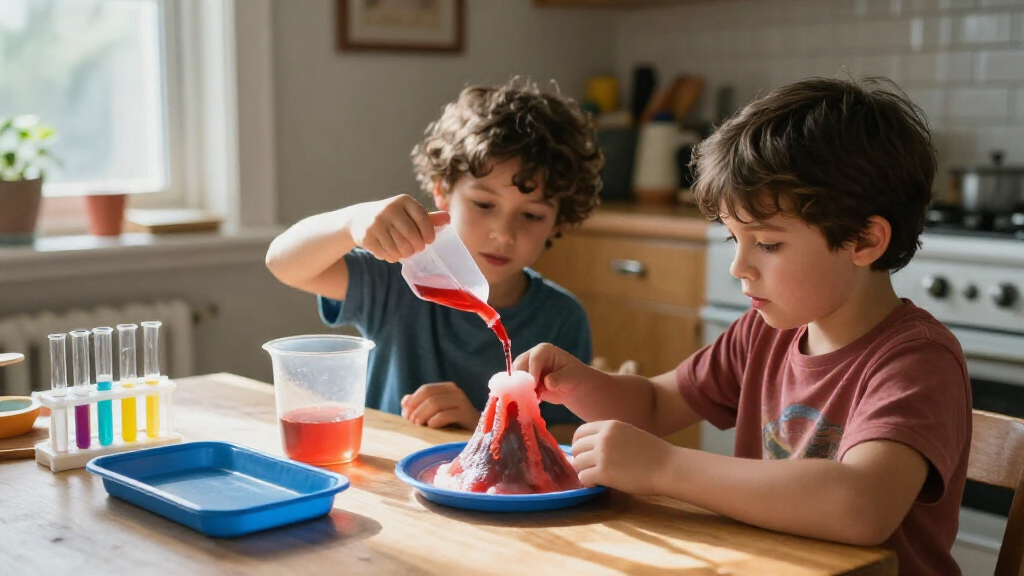
A fizzing cup can hold more science than a page of facts—if your child gets to ask why it fizzed. Educational science kits give children a structured way to explore scientific ideas by building, observing, testing, and recording what happens.

Prime made for students and young adults
- Fast, free delivery for dorm and study essentials
- Prime Video and Amazon Music included
- Member-only deals
That doesn’t mean every colorful box leads to a lightbulb moment. Some kits feel like a recipe with a prize at the end; others leave room to make predictions, try a change, and compare results. The difference matters when you want an activity that keeps your child thinking after the first bubbling reaction.
This guide will help you match a kit to your child’s interests and abilities, spot the signs of hands-on learning, and check the practical details before you buy. You’ll also see how a small question—“What do you think will happen if we use less water?”—can turn a rainy afternoon into a real investigation.
Choose a kit around your child’s interests and abilities, not the activity count on the box.
Read age guidance, warnings, materials, and supervision instructions before starting.
Look for activities that invite a prediction, an observation, a comparison, and an explanation.
Check whether apps are optional, compatible with your devices, and useful for the hands-on activity.
A short conversation or sketch can help connect an experiment to everyday life.
See what your child can actually learn from a science kit
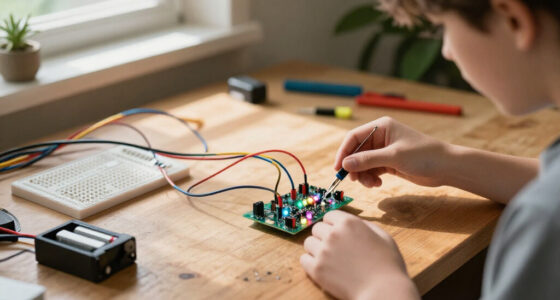
Educational science kits can help children practice asking questions, making predictions, and testing ideas through real activities. They might build a simple circuit, examine a rock, watch a seed sprout, or compare how different surfaces affect a toy car. A kit gives the activity a shape: materials, instructions, and a place to start.
The box alone doesn’t teach the lesson. A child who pours two liquids together and watches foam rise may remember the spectacle, but the learning gets richer when someone asks, “What changed when we used less?” That question invites the child to notice, compare, and explain rather than simply wait for the next step.
Think of a kit like a set of musical instruments: handing over a drum doesn’t teach rhythm, but a little guidance can help a child hear patterns and make their own. If your child builds a paper bridge from a kit, invite them to test it with pennies, then fold another bridge shape and compare how much weight each one holds.
Hands-on experiments can also connect school topics to familiar things. A circuit kit makes the word electricity less abstract when your child sees a battery light a bulb. A plant kit links growth to the green shoot on the kitchen windowsill. You provide the bridge between the activity and everyday life.
Popular right now

TCL 85-Inch QM6K QLED Mini LED 4K HDR Smart Google TV, 144Hz

KitchenAid Commercial Series 8-Quart Bowl-Lift Stand Mixer, White

iRobot Roomba 105 Combo Robot Vacuum and Mop with AutoEmpty Dock
As an affiliate, we earn on qualifying purchases.
Choose an activity your child will want to try twice
The best starting point is your child’s interest and comfort level, because a kit has little value if it stays unopened. A child who takes apart broken gadgets may enjoy electronics or robotics, while a young nature watcher may prefer seeds, insects, or rocks. Interests change, too, so a kit can offer a fresh way to explore something they already love.
Educational science kits often span several topics, but more activities don’t always mean more learning. Look for instructions with clear diagrams and activities that explain what the child is doing. If a kit promises twenty experiments but each one takes two minutes and ends without a question or explanation, it may be less engaging than one with five experiments a child can repeat and vary.
Age labels help, but they don’t capture everything about a child. Reading level, patience, familiarity with tools, motor skills, and comfort with textures can all shape the experience. For instance, an eight-year-old who loves constructing things might find a model bridge kit easier than a chemistry kit with dense instructions, even if both carry the same age label.
Before buying, check whether the child can do most of the activity themselves or whether an adult will need to set it up. A kit that requires a grown-up at every step can still make a lovely shared project, but it may disappoint a child expecting to work alone. Match the promise on the box to the kind of afternoon you actually want to have.
- For a builder: Look for structures, circuits, or beginner robotics.
- For a nature fan: Try plant growth, geology, or weather observations.
- For an experimenter: Choose repeatable activities with clear ways to compare results.
Check safety and adult help before you open the box
A science kit is suitable for your household when you understand its age guidance, materials, and supervision needs before the activity begins. Read the warnings and ingredient lists, check whether protective equipment is required, and look for small parts that could pose a choking risk to younger children. Keep the manufacturer’s instructions close by.
Age guidance is a starting point, not a promise that every child can use a kit independently. A younger child might happily watch an older sibling build a circuit, then help identify the parts. A child with limited hand strength or sensory sensitivities may need a different tool, a quieter setup, or an adult to prepare materials.
Picture a kit that includes goggles and asks an adult to handle one setup step. You can still make it a child-led activity: let your child read the prediction, choose what to observe, and write or draw the result, while you manage the step called out in the instructions. The child stays involved, and you respect the kit’s safety directions.
Follow the manufacturer’s instructions, including its guidance on supervision, protective equipment, and disposal. Don’t swap in household ingredients or tools just because they seem similar unless the kit or a trusted adult says that substitution is appropriate. Put supplies away after use, especially if small parts or liquids are involved.
Before a child starts, you should be able to answer three simple questions: What needs adult help? What safety steps does the label require? Where will the materials go afterward?
Turn one experiment into a small investigation
A strong kit does more than tell your child which steps to follow; it gives them a chance to compare results and explain what they noticed. You can use five simple moves: ask a question, make a prediction, observe what happens, change one part, and describe the result. This turns an activity into a short investigation without turning your kitchen table into a classroom.
- Ask: What are we curious about? For a seed kit, try, “Does this seed need light to sprout?”
- Predict: Invite your child to say or draw what they think will happen.
- Observe: Record a detail they can see, such as how tall a shoot looks or whether a bulb lights.
- Change one thing: Compare two setups while keeping the other conditions as similar as you can.
- Explain: Ask what the result suggests and what they would test next.
For example, if a kit includes a paper-plane activity, fly one plane with short wings and another with longer wings. Mark where each lands, then ask your child what they noticed. The result doesn’t need to match a neat prediction; an unexpected flight gives you another question to explore.
Keep the tone curious. A simple log with a date, a quick sketch, and one sentence is enough for many children. If your child would rather explain the result aloud, let them. The point is to pay attention and make a connection, not to produce a perfect worksheet.
Decide whether app features add real value
Some science kits pair physical activities with digital instructions, videos, apps, or online extensions. These tools can help a child see a demonstration or get extra ideas, but a screen feature doesn’t automatically make the kit more educational. Ask whether the hands-on activity still works if you put the device away.
Imagine your child building a small robot after dinner. An optional video that shows how the wheels attach could save frustration, while an app that must stay open through every step may turn the activity into screen-following. The right fit depends on what your child needs and how your household uses devices.
Before buying, check the app’s device compatibility, whether it requires an account, what information it collects, and whether the digital content is optional. Also look for extra requirements: batteries, common household supplies, a phone or tablet, or an internet connection may not be included with the kit. A gift can be disappointing when the main activity stops at the word “download.”
Category trends include kits that combine traditional activities with coding, robotics, nature study, or reusable materials. These options can broaden the experience, but a screen-free kit may be a better choice for a child who enjoys getting outside or handling physical parts. Product details and availability change, so check current packaging and product information before relying on claims about a particular brand or feature.
Compare the details that make a kit worth keeping
To judge whether a science kit fits, compare its activity quality, instructions, repeatability, and support needs. These details say more about the likely experience than a large activity count on the front of the box. A kit with reusable pieces and clear explanations may stay useful long after the first experiment.
| What to check | Why it matters | What it might look like |
|---|---|---|
| Instructions | Children can follow the activity and understand its purpose. | Clear diagrams, plain language, and a short explanation of the result. |
| Repeatability | Repeating an activity helps a child compare outcomes. | Reusable parts or several trials that test one changed condition. |
| Adult help | You can plan for the time and supervision the kit needs. | Setup steps and supervision needs stated before the activity starts. |
| Included supplies | You avoid surprises that interrupt the project. | A clear list of batteries, household items, or protective gear needed. |
| Accessibility | More children can take part comfortably. | Readable steps, manageable parts, and room to observe in different ways. |
For example, a reusable weather station could give a child several chances to track rain or wind over a week, while a one-use activity might offer a brighter first moment but less reason to return. Neither is automatically wrong: a one-off kit can suit a birthday activity, while repeated experiments may work better for a curious child who likes to keep records.
Use the table as a practical checklist, then consider where the kit will be used. A large setup may not suit a small apartment table, and a nature activity may be especially welcome if your child already loves heading outside. The right purchase fits the child and the family’s ordinary routines.
Frequently Asked Questions
What age are science kits suitable for?
It depends on the kit and the child. Check the recommended age, reading demands, small parts, activity complexity, and supervision guidance; younger children often need an adult to lead or prepare parts of the activity.
Do children need an adult to use a science kit?
Some kits suit independent use by older children, while others need adult help during setup or throughout the activity. Read the instructions first, especially when they mention heat, tools, chemicals, electricity, or small parts.
Are science kits safe?
A kit can be appropriate when you follow its instructions, age guidance, supervision requirements, and protective equipment directions. Check the included materials and warnings before use, then put supplies away and follow disposal guidance when the activity ends.
Do science kits really help children learn?
They can give children a concrete way to explore a concept through building, observing, or testing. Learning depends on the activity and the child’s engagement, so invite them to talk about what they noticed instead of treating the expected result as the whole lesson.
What should I look for when buying an educational science kit?
Match the topic and complexity to your child, then check safety information, instruction quality, included supplies, adult help, and whether parts can be reused. A kit with a few repeatable activities and clear explanations may be a better fit than one that simply advertises a high activity count.
Are app-connected science kits worth it?
They can be useful if videos or digital instructions help your child understand the activity. Check device compatibility, screen requirements, and privacy information, and see whether the physical kit remains worthwhile when the app is optional or unavailable.
Conclusion
Choose a kit that makes your child curious enough to ask what would happen if they changed one thing. Before you buy, check the activity, instructions, age guidance, and adult help it needs; once you start, leave room to pause and talk about what you both see.
The best science kit may not end with a perfect result. It may end with a damp seed tray, a crooked paper bridge, and your child leaning over the table to ask, “Can we try it again?”