For students comparing science flash cards, the best choice depends on whether you need detailed anatomy review, quick chemistry reference, or approachable facts for younger learners. I’d choose Anatomy Flashcards: 300 Flashcards with Anatomically Precise Drawings as the best overall for its focused, visual anatomy coverage. NewPath Learning Earth Science Vocabulary Builder is a stronger match for middle school vocabulary, while Duncan Toys Periodic Table Flash Cards suits students who want an organized element deck with a hard case. The tradeoff is between subject depth, age-appropriate wording, and portable durability: a broad deck may be less useful for a specific exam than a targeted one. Read on for the full breakdown and guidance on matching a deck to your course.

Prime made for students and young adults
- Fast, free delivery for dorm and study essentials
- Prime Video and Amazon Music included
- Member-only deals
Key Takeaways
- Anatomy has the widest choice of dedicated decks: the 300-card anatomy set and TribeRN’s 320-resource set target more advanced study, while QuickStudy offers a more reference-oriented option.
- Periodic-table decks share the same 118-element focus but differ in presentation: laminated cards, color-coded categories, a bonus sheet, or a hard case may matter more than the element count.
- NewPath is the clearest age-specific pick: its middle-school earth science vocabulary focus is more aligned with classroom learning than exam-prep or anatomy decks.
- Exam preparation calls for a narrower match: the 400-card microbiology and ACT math-and-science sets serve particular study goals, not general science review.
- Kid-friendly breadth trades depth for variety: Merka combines solar system, anatomy, and geography facts in a waterproof deck, while subject-specific sets give students more focused practice.


| science flash cards for student | Material |
|---|---|
| Anatomy Flash Cards: A QuickSt | — |
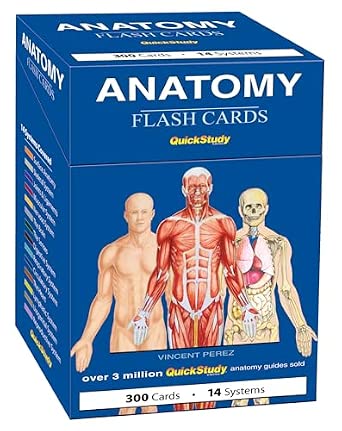
| Anatomy Flashcards: 300 Flashc | — |
| NewPath Learning Earth Science | Heavy stock paper |
| Microbiology Flash Cards | Cardboard |
| Periodic Table of Elements Lam | — |
| 118-Piece Periodic Table of El | High-quality paper with double-sided lamination |
| Merka Science Flash Cards for | Cardstock |
| Zastic! Laminated Periodic Tab | Premium cardstock |
| ACT Flash Cards 2026-2027 | 40 | Paper |
| Periodic Table Educational Fla | Paper |
| Duncan Toys Periodic Table Fla | Paper |
| TribeRN Anatomy and Physiology | Paper |
More Details on Our Top Picks
Anatomy Flash Cards: A QuickStudy Reference & Study Tool
Quick reference format makes this set a practical fit for students who want to revisit core anatomy concepts in short study sessions. Compared with Anatomy Flashcards: 300 Flashcards with Anatomically Precise Drawings and Exhaustive Descriptions, this QuickStudy option is positioned more around efficient review than extensive descriptions and detailed card-by-card coverage. That makes it easier to use as a compact refresher, but less suited to learners who need fuller explanations or a large volume of visual prompts. Its stated coverage of essential anatomical concepts can support routine coursework and basic professional reference; it is not a replacement for a textbook or an advanced anatomy resource. I’d choose it for focused repetition, and skip it if the goal is exhaustive detail.
Pros:- Designed for quick review of essential anatomical concepts
- Portable format suits short study sessions
- Useful as a study aid as well as a quick reference
- Relevant to both students and healthcare professionals
Cons:- Provides less detail than a textbook or an exhaustive card set
- May not cover advanced anatomy topics
- No card count, dimensions, or material details are provided
Best for: Students in introductory anatomy courses who want a portable aid for short review sessions and recall practice
Not ideal for: Advanced anatomy learners or students who need extensive explanations, specialist topics, or textbook-level detail
- Subject:Anatomy
- Format:Flash cards
- Use:Reference and study aid
- Coverage:Essential anatomical concepts
- Intended users:Students and professionals
- Product type:QuickStudy reference
Our verdict“Choose this QuickStudy set for portable reinforcement of core anatomy, but pick the 300-card anatomy deck if detailed descriptions and broader card coverage matter more.”
Anatomy Flashcards: 300 Flashcards with Anatomically Precise Drawings and Exhaustive Descriptions
Three hundred cards, anatomically precise drawings, and extensive descriptions give this set a more in-depth study role than Anatomy Flash Cards: A QuickStudy Reference & Study Tool. The extra visual and written detail is useful when students need to connect structures with explanatory context, rather than simply refresh familiar terms. That depth also asks more of the learner: working through a large deck takes time, and the supplied information does not specify card dimensions or material, so portability and durability are harder to judge. I’d favor this set for anatomy courses where visual reference and fuller explanations support regular study. Students who only want a fast refresher may find the QuickStudy deck a simpler match.
Pros:- Includes 300 cards for broad study coverage
- Anatomically precise drawings support visual learning
- Exhaustive descriptions add context beyond simple prompts
- Suited to students and professionals building anatomical knowledge
Cons:- A large deck can take substantial time to work through
- Card size and material are not specified
- Detailed content may be more than needed for quick review
Best for: Anatomy students who learn through labeled visual material and want a large deck with detailed descriptions
Not ideal for: Learners seeking a compact, minimal review set or buyers who need confirmed card dimensions and material details
- Subject:Anatomy
- Number of cards:300
- Visuals:Anatomically precise drawings
- Descriptions:Exhaustive descriptions
- Intended users:Students and professionals
- Format:Flashcards
Our verdict“Pick this deck for detailed, image-supported anatomy study; choose the QuickStudy reference instead for lighter, faster review.”
NewPath Learning Earth Science Vocabulary Builder Flash Card Set, Middle School
Earth science vocabulary is the focus here, with 200 illustrated cards aligned with Next Generation Science Standards. Each card pairs a term with pronunciation, a graphic, and a definition, giving middle school students more cues for learning unfamiliar words than the anatomy-focused decks in this roundup. The teacher resource guide and group-review activities also make it more adaptable for classroom use or homeschooling. Compared with the broadly visual Periodic Table of Elements Laminated Flashcard Science Kit, this set offers a defined subject and school-level vocabulary focus rather than a cross-age introduction to chemistry concepts. Its tradeoff is scope: it is not a general science deck, and the paper cards need storage and care.
Pros:- Covers 200 key Earth science terms
- Combines pronunciation, graphics, and definitions on each card
- Aligned with Next Generation Science Standards
- Includes a teacher resource guide with review activities
Cons:- Focused on middle school Earth science rather than broader science subjects
- Heavy stock paper is less suited to wet or rough handling than laminated cards
- No digital component is included
Best for: Middle school teachers, homeschoolers, and students practicing Earth science vocabulary with definitions and visual cues
Not ideal for: Older students seeking advanced Earth science, learners needing a multi-subject science deck, or buyers wanting a digital study tool
- Number of cards:200
- Card size:4 x 5.5 inches
- Material:Heavy stock paper
- Subject:Earth science vocabulary
- Age range:36 months to 16 years
- Weight:1.3 pounds
- Model number:44-6018
- Set name:Earth Science Vocabulary Builder
Our verdict“Choose this set for structured middle school Earth science vocabulary practice, especially in classrooms or homeschool groups.”
Microbiology Flash Cards – No Fluff – Nursing School Essentials for Students – 2026-2027 TEAS HESI A2 Review (400 Cards)
Four hundred microbiology cards make this the most specialized, exam-oriented choice in this group. Topics include microbial metabolism, infectious agents, immunity, and epidemiology, while mnemonic tips are intended to help students retain dense material. Compared with the middle-school-focused NewPath Learning Earth Science Vocabulary Builder, this deck is aimed at older learners preparing for healthcare coursework and named exams, not broad introductory science vocabulary. Its 3 x 5-inch cards offer room for study notes, with glossy fronts and matte backs described for that purpose. The narrow subject focus is also its main limitation: this is not a complete nursing review or a general biology deck, and beginners may find the content demanding.
Pros:- Covers key microbiology areas relevant to healthcare study
- Includes 400 cards for extended topic review
- Mnemonic tips provide memory cues for technical material
- Matte backs are described as suitable for note-taking
Cons:- Limited to microbiology rather than a complete nursing exam review
- Content may be too advanced for beginners
- Physical cards offer no digital study option
Best for: Nursing, pre-med, and healthcare students who need focused microbiology review alongside exam preparation
Not ideal for: Younger or beginning science students, and nursing candidates who need a full review across multiple subjects
- Number of cards:400
- Card size:3 x 5 inches
- Material:Cardboard
- Subject:Microbiology
- Recommended age:12 years and up
- Card finish:Glossy fronts and matte backs
- Study aids:Mnemonic tips
- Exam preparation:TEAS, HESI A2, and NCLEX-related review
Our verdict“Choose this deck for concentrated microbiology practice in healthcare studies, not as a standalone nursing or general science review.”
Periodic Table of Elements Laminated Flashcard Science Kit
Color-coded laminated cards and an interactive game make this kit a more hands-on entry point than the anatomy and microbiology decks, which focus on more specialized study. Its periodic-table theme introduces elements, chemical structures, and related science concepts, while the storage box helps keep the set together for classroom or homeschool activities. Compared with NewPath Learning Earth Science Vocabulary Builder, this kit is broader in age appeal and built for repeated handling, but the Earth science set gives middle school learners more explicit vocabulary support through pronunciation and definitions. The kit’s broad, introductory framing can be helpful for early learners, though the available details do not establish how much element data each card provides. Advanced chemistry students may need a more detailed resource.
Pros:- Laminated cards are designed to resist dirt and fingerprints
- Color coding supports quick visual grouping
- Includes an interactive game and storage box
- Broad age positioning suits classroom and homeschool use
Cons:- May be too basic for advanced chemistry coursework
- The supplied description gives limited detail about scientific information on individual cards
- A 118-piece set may require organized storage between activities
Best for: Teachers and families introducing the periodic table through visual sorting and group activities
Not ideal for: Advanced chemistry students who need detailed element data or a rigorous card-by-card reference
- Number of pieces:118
- Material type:Plastic
- Finish:Matte laminate
- Theme:Science
- Manufacturer:Revisa Publishing
- Manufacturer part number:Blue6
- Age range:5 months and up
- Included:Interactive game and storage box
Our verdict“Pick this kit for durable, activity-led introductions to the periodic table, but choose a more detailed reference deck for advanced chemistry study.”
118-Piece Periodic Table of Elements Laminated Flashcards for Science and Chemistry Study
For students who want a focused way to review the elements, this set pairs all 118 cards with a compact format that is easy to bring to class or use for quick practice. Its double-sided lamination helps protect the cards from spills and repeated handling, a useful advantage over the paper-based Periodic Table Educational Flashcards, which also add a bonus reference sheet. The 11 x 8 cm cards are larger than the Merka deck, but remain portable; that extra space may help when reviewing element details, though the supplied information does not specify exactly which facts appear on each card. This is a chemistry-only choice, not a broad science curriculum, and its recommended age of 15 and up rules out younger learners. Choose it for reusable element practice rather than interactive or digitally guided study.
Pros:- Includes cards for all 118 elements
- Double-sided lamination adds resistance to water and wear
- Larger cards than compact decks such as Merka’s
- Storage box keeps the deck together for transport
Cons:- Focused on chemistry rather than multiple science subjects
- Recommended for ages 15 and up, limiting use with younger students
- No digital or interactive study features
Best for: Teen students and teachers who want a portable, reusable deck for practicing periodic-table elements.
Not ideal for: Younger children or students seeking coverage across biology, earth science, or interactive digital practice.
- Card count:118
- Card size:11 x 8 cm (4 x 3 inches)
- Material:High-quality paper with double-sided lamination
- Package includes:118 flashcards and a storage box
- Topics:Periodic table and chemical elements
- Recommended age:15 years and up
Our verdict“Pick this deck for durable, portable element drills, but choose Merka for broader, younger-child-friendly science topics.”
Merka Science Flash Cards for Kids – 90-Count Waterproof Deck with Solar System, Human Anatomy, and Geography Facts
Merka takes a different route from the element-focused decks in this group: its 90 cards span the solar system, human anatomy, and geography, making it a better fit for children sampling several school topics than for students preparing for chemistry class. The small 3.5 x 2.5-inch cards suit travel and quick question sessions, while the waterproof, tear-resistant design is practical for classroom handling. Compared with the 118-Piece Periodic Table of Elements Laminated Flashcards, Merka gives up depth on chemistry in exchange for broader subject variety and an age range starting at five. That breadth is also its limit: the supplied description warns that the content may feel basic to advanced learners, and the listed educational objective is social studies despite the science topics. It is a starter deck, not a substitute for subject-specific study materials.
Pros:- Combines solar system, anatomy, and geography topics in one deck
- Waterproof and tear-resistant construction suits classroom and travel use
- Compact 3.5 x 2.5-inch cards are easy for children to handle
- Listed age range begins at five years
Cons:- Content may be too basic for advanced learners
- Does not provide the element-by-element chemistry focus of the periodic-table decks
- No digital or interactive study features
Best for: Parents and elementary teachers seeking a sturdy, travel-friendly deck for children aged five and up who are exploring basic science and geography.
Not ideal for: Older students who need detailed chemistry facts, advanced science content, or focused test preparation.
- Card count:90
- Age range:5 years and up
- Card dimensions:3.5 x 2.5 x 0.1 inches
- Material:Cardstock
- Weight:5.28 ounces
- Topics:Solar system, human anatomy, and geography
- Packs:1
Our verdict“Choose Merka for young learners who benefit from varied introductory topics, not for students needing detailed subject review.”
Zastic! Laminated Periodic Table Flash Cards 118 – Educational Science Tool for Students and Teachers
Zastic! is the most clearly reference-oriented pick among these periodic-table decks: it is described as carrying detailed information for all 118 elements, which suits students who want more than a quick visual prompt. Its laminated cardstock construction and 3.75 x 2.75-inch format keep the set portable while offering slightly more surface area than the 3.5 x 2.5-inch Periodic Table Educational Flashcards. Unlike the ACT Flash Cards 2026-2027, however, this deck stays within chemistry rather than combining subjects with a game and spaced-repetition box. That focus is useful for chemistry study but narrows its classroom reach. The product data also says users need basic knowledge to get full benefit, and it does not describe interactive or digital support. I would favor it when element-level detail matters more than breadth or guided test prep.
Pros:- Covers all 118 elements with described detailed information
- Laminated cardstock is water-resistant and suited to repeated handling
- Portable dimensions fit on-the-go review
- Suitable for students, teachers, teens, and adults
Cons:- Chemistry-focused content offers less subject variety than Merka’s deck
- Basic chemistry knowledge helps students get full benefit
- No digital or interactive features
Best for: Teen students, adult learners, and teachers who want a portable reference deck with detailed information on each element.
Not ideal for: Beginners without basic chemistry grounding or students looking for a multi-subject study system with built-in activities.
- Card count:118
- Material:Premium cardstock
- Card size:3.75 x 2.75 inches
- Theme:Science
- Age range:Teens, adults, teachers, and students
- Coverage:All 118 elements
- UPC:685650191089
Our verdict“Choose Zastic! when detailed element references are the priority and a chemistry-only deck fits your study plan.”
ACT Flash Cards 2026-2027 | 400 ACT Math + Science Flash Cards | Vocab Cards | Prep Cards | Board Games | Test Prep Flashcards | Study Kit for Classroom and Home
For high-school students studying toward the ACT, this is the broadest test-prep system in the batch: 400 cards cover math, science, and vocabulary, with a board game, travel case, and spaced-repetition box adding structure beyond a standard deck. That makes it more exam-oriented than the Zastic! Periodic Table Flash Cards, which focus on element knowledge rather than mixed-subject preparation. The tradeoff is less science specialization: ACT science review shares space with math and vocabulary, so this is not the best choice for a student who wants a dedicated chemistry or anatomy deck. The paper cards are compact at 3 x 2 inches, useful for short sessions, but the kit does not include full-length practice tests. Its age recommendation of 15 and up also makes it unsuitable for younger learners.
Pros:- 400 cards cover math, science, and vocabulary
- Spaced-repetition box supports organized review sessions
- Board game offers a group-study alternative to solo drilling
- Travel case and compact cards suit portable study
Cons:- Science is one part of a mixed-subject ACT deck rather than the sole focus
- Does not include full-length practice tests
- Recommended for ages 15 and up
Best for: Students aged 15 and up preparing for the ACT who want science practice alongside math, vocabulary, and structured review tools.
Not ideal for: Younger students, learners seeking detailed coverage of one science subject, or ACT candidates who need full-length practice tests.
- Card count:400
- Subjects:Math, science, and vocabulary
- Material:Paper
- Card size:3 x 2 inches
- Includes:Board game, spaced-repetition box, and travel case
- Recommended age:15 years and up
- Edition:2026-2027
Our verdict“Pick this kit for broad ACT review with built-in study structure, not for in-depth study of a single science topic.”
Periodic Table Educational Flashcards – 118 Elements with Atomic Data, Color-Coded Categories & Bonus Sheet
This deck makes the periodic table easier to scan by pairing atomic data with color-coded categories and a bonus reference sheet. That visual organization gives it a different role from Zastic!, whose description emphasizes detailed information on each element but does not mention category colors or a bonus sheet. At 3.5 x 2.5 inches, these cards are compact for quick review, while the extra sheet can provide a broader overview when individual cards feel fragmented. The paper construction is less clearly protective than the laminated cards from Zastic! or the 118-Piece Periodic Table of Elements Laminated Flashcards, even though the product description calls the set water-resistant and durable. It remains a static, chemistry-focused resource, and students without basic chemistry knowledge may need instruction alongside it.
Pros:- Covers all 118 elements with atomic data
- Color-coded categories support visual grouping
- Includes a bonus periodic-table sheet for quick reference
- Compact card dimensions support portable study
Cons:- Paper material is less clearly protective than the laminated Zastic! deck
- Static information offers no interactive study features
- Basic chemistry knowledge is helpful for full use
Best for: Students learning to recognize periodic-table categories who want element cards plus a separate visual reference sheet.
Not ideal for: Learners who need interactive explanations, broad science coverage, or clearly laminated cards for heavy daily handling.
- Number of pieces:118
- Card dimensions:3.5 x 2.5 x 0.04 inches
- Weight:182 g
- Material:Paper
- Theme:Science
- Coverage:118 chemical elements with atomic data
- Extra:Bonus periodic-table sheet
Our verdict“Choose this set for color-coded element review and a handy overview sheet, but favor a laminated deck for more clearly specified card protection.”
Duncan Toys Periodic Table Flash Cards with Hard Storage Case
For students starting to learn the elements, this 118-card set pairs names, symbols, and atomic numbers with facts and real-life examples. Grouping cards by element type gives beginners a way to notice patterns instead of treating the periodic table as a list to memorize. The hard storage case also makes it easier to keep the deck together between home study and class. Compared with the broader human-body coverage of TribeRN Anatomy and Physiology Flash Cards, Duncan is a focused introduction to one chemistry topic, not a general science review tool. Its basic information suits younger learners, but students seeking advanced chemistry detail may outgrow it. The cards are paper, so frequent handling can wear them down, and students who need a more durable laminated deck may prefer another periodic-table option in this roundup.
Pros:- Includes all 118 elements with names, symbols, and atomic numbers
- Element-type groupings help beginners learn categories and patterns
- Real-life examples and facts add context beyond memorizing symbols
- Hard case helps keep the paper deck organized and portable
Cons:- Basic coverage may not meet the needs of advanced chemistry students
- Paper cards can show wear with repeated handling
- Focused on the periodic table rather than several science subjects
Best for: Elementary and middle-school students beginning to learn element names, symbols, and basic periodic-table groupings.
Not ideal for: Advanced chemistry students who need detailed element data, or students who want laminated cards for heavy daily use.
- Number of cards:118
- Information covered:Element names, symbols, atomic numbers, and facts
- Organization:Grouped by element type
- Storage:Hard storage case
- Material:Paper
- Dimensions:2.8 x 1.85 x 4.15 inches
- Theme:Science
- Recommended age:6 years and up
Our verdict“Choose Duncan for an organized, beginner-friendly introduction to all 118 elements; choose a more advanced or durable deck if the student needs deeper chemistry study or heavy-use cards.”
TribeRN Anatomy and Physiology Flash Cards – 320 Study Resources for Students
TribeRN is the more specialized study deck for students who need to recall anatomy and physiology across the major human body systems. Its 320 cards, clear illustrations, color coding, and mnemonics offer several cues for learning complex material, making it a closer fit for healthcare coursework than the elementary periodic-table focus of Duncan Toys Periodic Table Flash Cards. The hole-punched, tear-resistant cards are designed for repeated review and portable study, though they remain physical cards rather than a digital study system. That detail matters for learners who want app-based practice or easy electronic searching. TribeRN’s breadth and terminology may also be excessive for casual science learners; compared with narrower introductory sets, it asks more of the student and suits a defined anatomy or healthcare study goal best.
Pros:- 320 cards cover all major human body systems
- Color coding and illustrations support visual review
- Mnemonics provide memory cues for complex topics
- Tear-resistant, hole-punched cards are suited to portable study
Cons:- Detailed anatomy content can be too demanding for casual learners
- Physical cards do not provide digital access or app-based practice
- Larger dimensions may be less convenient than a compact card deck
Best for: Nursing, medical, and other healthcare students who want a portable physical deck for reviewing body systems, terminology, and recall cues.
Not ideal for: Casual learners or younger students who want simple science facts, and students who rely on digital flashcards or app-based study tools.
- Number of cards:320
- Subject coverage:Anatomy and physiology; all major body systems
- Study features:Color coding, illustrations, and mnemonics
- Material:Paper
- Durability features:Tear-resistant cards
- Portability feature:Hole-punched cards
- Dimensions:5.27 x 4.58 x 4 inches
- Theme:Anatomy
Our verdict“Choose TribeRN for structured, physical anatomy review tied to healthcare studies; skip it if you want light science facts or a digital-first study format.”

How We Picked
I compared the 12 options by subject fit, stated content, and intended learner. A useful deck should make its scope clear: a student revising anatomy needs more than a handful of general facts, while a middle-school learner may benefit from accessible earth science vocabulary rather than clinical terminology. I also considered how card counts, illustrations, element data, and stated exam focus may support different study tasks; a larger deck is not automatically a better fit if its content does not match the course.
The ranking favors useful coverage and clear audience fit over broad claims or card count alone. Subject-specific decks rank ahead of general-interest sets when they offer a more direct route to a defined learning goal; practical details such as lamination, waterproofing, and storage matter when they improve handling. I distinguish classroom review, reference use, younger learners, and exam preparation rather than treating every deck as interchangeable. Product details in the names and descriptions inform this comparison, so I do not assume unlisted features such as answer format, print size, or curriculum alignment.
| science flash cards for student | Material |
|---|---|
| Anatomy Flash Cards: A QuickSt | — |
| Anatomy Flashcards: 300 Flashc | — |
| NewPath Learning Earth Science | Heavy stock paper |
| Microbiology Flash Cards | Cardboard |
| Periodic Table of Elements Lam | — |
| 118-Piece Periodic Table of El | High-quality paper with double-sided lamination |
| Merka Science Flash Cards for | Cardstock |
| Zastic! Laminated Periodic Tab | Premium cardstock |
| ACT Flash Cards 2026-2027 | 40 | Paper |
| Periodic Table Educational Fla | Paper |
| Duncan Toys Periodic Table Fla | Paper |
| TribeRN Anatomy and Physiology | Paper |
Factors to Consider When Choosing Science Flash Cards For Students
Before choosing a deck, match it to the student’s course, age, and study routine. The right flash cards should make it easier to retrieve knowledge the student is expected to learn, not simply add more facts to memorize.
Match the deck to the class or exam
Start with the topics and vocabulary used in the actual course, then check whether the deck names that subject and learner level. A microbiology deck aimed at nursing entrance preparation may be less suitable for a general biology class, even if both cover living systems. Likewise, an ACT science deck should support test practice rather than replace a textbook or class notes. A common mistake is buying the broadest-sounding set and assuming it covers the exam syllabus. Compare the deck’s stated scope with a course outline before choosing. If alignment is unclear, treat the cards as supplementary review, not a complete study plan.
Choose the right depth for the student
More detail can help advanced learners but slow down a student who is still learning basic terms. Anatomy cards with precise drawings and extensive descriptions may suit students ready to connect structures with terminology, while a vocabulary-focused deck can give younger learners a manageable starting point. Look for a balance between facts per card and how much information the student can recall without turning each review into rereading. A high card count is not a measure of learning quality by itself. For a first deck, simpler prompts can build confidence; later, a more detailed set can extend that foundation. Consider whether the student needs recognition, definition recall, or connections between concepts.
Think about how the cards will be studied
Flash cards work best when students actively try to recall an answer before checking it. Before buying, consider whether the deck’s stated design supports the study method the student will use, such as reviewing terms, identifying visual structures, or drilling element facts. Cards used for short daily sessions should be easy to sort into small topic groups. For classroom or group use, clarity and a consistent format can matter more than having the largest set. A frequent misstep is treating cards as passive reading; that can feel familiar without revealing what the student has actually learned. Pair them with notes or practice questions when the course asks students to explain processes or solve problems.
Weigh durability against portability
Lamination, waterproofing, and a storage case can help cards stand up to frequent handling, travel, or shared classroom use. Those features do not make the science content more accurate, so prioritize them after confirming the deck covers the right material. A hard case can keep a small reference set organized, while a large deck may be less convenient to carry through a school day. Check whether the product description states the physical format and storage details rather than assuming all laminated cards are equally sturdy. If the cards will stay at a desk, portability may matter less than clear, readable content. For younger students, a durable surface may be useful if cards are handled often.
Decide whether a broad or focused deck will help more
A multi-topic deck can introduce science through varied facts, making it a better fit for casual learning or younger students than for a course-specific test. A focused anatomy, earth science, microbiology, or periodic-table set reduces topic switching and can support more concentrated revision. The tradeoff is that a narrow deck leaves other subjects uncovered. Avoid buying several overlapping sets before identifying the student’s immediate learning gap. If the goal is confidence across many topics, breadth may be welcome; if the student has an upcoming assessment, depth and scope alignment usually matter more. A focused deck can later be supplemented with class materials rather than replaced by a general deck.
Frequently Asked Questions
Are periodic-table flash cards enough to prepare for a chemistry class?
They can support recall of element names and atomic data, but they are not a full chemistry course resource. Students may also need practice with chemical symbols, trends, bonding, equations, and calculations, depending on their class. Check which information the deck actually prints on each card rather than relying on the title alone. A periodic-table deck works best alongside lessons and problem sets that require students to apply what they memorize. If the student’s main challenge is solving problems, prioritize practice questions too.
Should I choose an anatomy deck with more cards or one with more detailed descriptions?
Choose based on the student’s current level and study goal, not the count alone. A larger set may offer more topics, while detailed descriptions and precise drawings may be more helpful for connecting structures with terminology. Students new to anatomy can be overwhelmed by dense cards, especially if they have not learned the basic vocabulary yet. More advanced learners may value a broader set for cumulative review. When product details do not show how information is organized, compare the stated content and intended audience before deciding.
Are flash cards designed for children useful for middle school science?
They can be useful for building curiosity and reviewing familiar facts, but a general children’s deck may not match a middle school curriculum. A set that combines topics such as geography, anatomy, and the solar system offers variety rather than sustained coverage of one class unit. For vocabulary and classroom review, a subject-focused option such as an earth science set may be a closer fit. Check the age or grade level and the terminology used in the product description. If the learner needs exam preparation, confirm that the cards cover the tested topics before using them as a primary resource.
Can exam-prep flash cards replace a course textbook or practice tests?
No. Exam-oriented cards can help with quick recall and targeted review, but they may not provide the explanations or problem-solving practice a student needs. A deck’s stated exam label does not guarantee that every current test topic is covered. Use the official exam outline or course syllabus to identify gaps and check whether the deck matches them. Practice tests can show whether the student can apply knowledge under exam conditions, while cards help revisit facts and terms. Treat flash cards as one part of a study routine rather than the whole routine.
When is a laminated or waterproof deck worth choosing?
Durable cards make sense when a student will carry them between classes, study in shared spaces, or use them frequently. Waterproofing may also suit younger learners who handle cards during activities, but it does not improve topic coverage or teaching quality. For occasional home review, a standard format may be enough if the cards are stored carefully. Look for clearly stated material and storage details, since the word “laminated” alone does not tell you how the deck is organized or how easy it is to read. Choose durability after confirming the content fits the learner’s needs.
Conclusion
For the strongest all-around subject-specific choice, I’d start with Anatomy Flashcards: 300 Flashcards with Anatomically Precise Drawings, especially for students ready for detailed anatomy review. The best value depends on the learning goal: NewPath Learning Earth Science Vocabulary Builder is the clearest fit for middle school earth science, while the periodic-table sets offer focused element review with different practical touches. For a premium-style, more extensive study resource, consider TribeRN Anatomy and Physiology Flash Cards for its stated 320 resources; students who prefer a reference-style format may favor QuickStudy instead. Beginners and younger learners are better served by NewPath or the broad, waterproof Merka deck than by nursing or ACT exam-prep cards. For specific needs, choose the microbiology set for nursing entrance review, the ACT deck for math-and-science test preparation, and a periodic-table deck for element facts. Match the stated content to the student’s course first, then weigh card format and durability.
Halloween Picks
halloween
As an affiliate, we earn on qualifying purchases.