
TL;DR

Prime made for students and young adults
- Fast, free delivery for dorm and study essentials
- Prime Video and Amazon Music included
- Member-only deals
NASA has released a final Request for Proposals seeking U.S. industry plans to develop, certify and operate commercial destinations in low Earth orbit. Proposals are due Dec. 8, and NASA expects to make contract awards in spring 2027; the agency has not named contractors or disclosed award amounts in the release.
NASA has released a final Request for Proposals inviting companies to plan, build and operate commercial destinations in low Earth orbit, part of the agency’s effort to maintain a U.S. human presence there after the International Space Station retires. Proposals are due Dec. 8, and NASA expects to make awards in spring 2027.
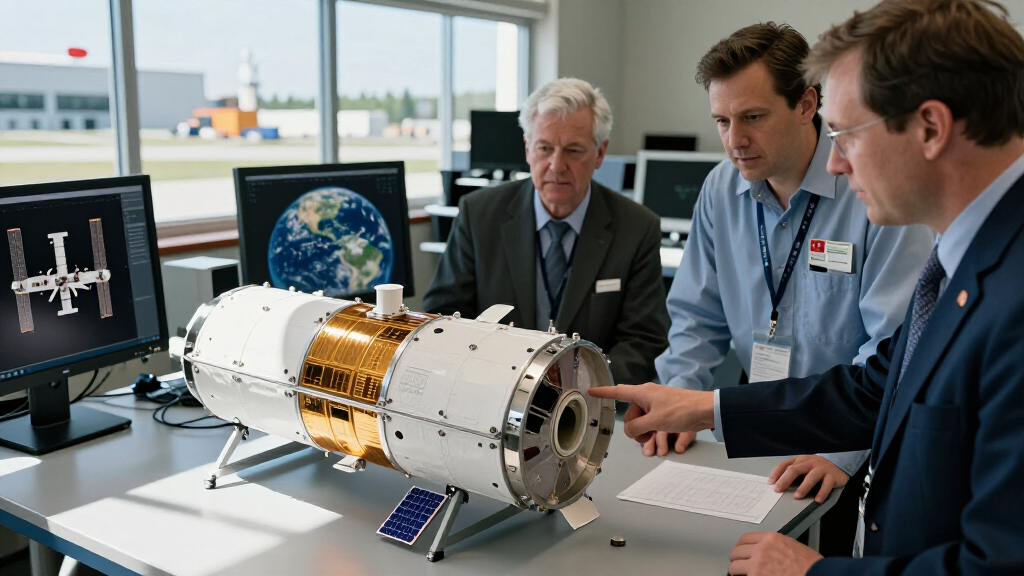
The solicitation seeks companies able to provide an end-to-end service for human spaceflight, including design, construction, testing and certification of low Earth orbit destinations, along with transportation and station services. NASA says the facilities would support research and exploration activities in orbit.
NASA intends to use firm-fixed-price, multi-award indefinite-delivery/indefinite-quantity contracts. The agency plans to select two or more contractors for early development. A later competitive task order would cover final design, testing and evaluation, certification, and services, which NASA says could be supplied by one or more contractors.
The announcement does not identify interested companies, set out contract award amounts or guarantee that a proposed station will be built. It describes a staged procurement through which NASA can support early work and later compete the next phase.
Planning for NASA After the ISS
The solicitation is a step toward a future in which NASA could purchase access to privately developed stations rather than rely on the International Space Station as its sole orbital research destination. NASA says it will need a place in low Earth orbit to conduct research, develop technology, train crews and prepare for missions to the Moon and Mars.
For companies, the agency is seeking plans that can serve NASA while also developing other customers and markets. That commercial demand matters because a station’s long-term operation may depend on more than government contracts. NASA Administrator Jared Isaacman said the economics must work and that the agency wants credible plans and strong technical execution.
The procurement does not establish that commercial stations will be ready by a particular date or that private customers will support them. It does, however, set out how NASA intends to evaluate and support industry proposals as it plans for continued activity in orbit after the ISS era.
As an affiliate, we earn on qualifying purchases.
From Industry Feedback to Solicitation
NASA says the final request follows a series of discussions with industry. In March, the agency published two Requests for Information to gather views on low Earth orbit destinations and transportation. It released a draft Request for Proposals in July, then held an industry day and one-on-one meetings where companies could review and comment on its proposed acquisition approach.
The agency said those steps built on its Ignition event earlier this year and were intended to help shape its direction in low Earth orbit. The final solicitation now gives potential bidders the requirements and procurement structure for submitting formal plans. NASA frames the effort as part of its policy to sustain an American presence in orbit after the ISS retires, although the release does not give a retirement date for the station.
As an affiliate, we earn on qualifying purchases.
Bids, Costs and Station Readiness
NASA has not said which companies will submit proposals, how many proposals it expects, or how much funding may ultimately be awarded. The release also does not name a selected station design, provide a schedule for a station to begin operating, or specify when the ISS will retire.
The solicitation lays out a process, not a completed procurement or a commitment to build any particular destination. It remains unclear whether companies can secure enough non-NASA customers to support the commercial model Isaacman described, and how proposed stations will meet NASA’s technical and certification requirements.
As an affiliate, we earn on qualifying purchases.
Dec. 8 Proposal Deadline
Companies must submit proposals by Tuesday, Dec. 8. NASA expects contract awards in spring 2027, after which it plans to select at least two contractors for early development under the multi-award structure. A later competitive task order is intended to cover final design, testing and evaluation, certification, and services. NASA has not announced additional procurement milestones in the release.
As an affiliate, we earn on qualifying purchases.
Key Questions
What is NASA asking companies to propose?
NASA is seeking plans to design, build, test, certify and operate commercial low Earth orbit destinations, with transportation and other services for human spaceflight.
When are proposals due?
Proposals are due Tuesday, Dec. 8. NASA expects to make contract awards in spring 2027.
How many companies does NASA plan to select?
NASA intends to select two or more contractors for early development. A later competitive task order would cover final design, testing, certification and services.
Does this mean a commercial station is approved or ready to operate?
No. The announcement is a solicitation for proposals, not a confirmation that a station has been selected, built or scheduled to begin operations.
Why does NASA want commercial stations?
NASA says it needs a place in low Earth orbit for research, technology development, crew training and mission preparation after the International Space Station retires.
Source: primary
Fall Picks
fall essentials
As an affiliate, we earn on qualifying purchases.


![Navier-Stokes – Tristan Buckmaster [Pdf]](https://documente.net/wp-content/uploads/2026/09/navier-stokes-tristan-buckmaster-pdf-featured-560x300.jpg)




![Terence Tao: Math 2.0 [Pdf]](https://documente.net/wp-content/uploads/2026/10/terence-tao-math-2-0-pdf-featured-260x140.jpg)