
Documents are central to education, science, and reference work. They carry lesson plans, laboratory observations, historical photographs, original artwork, legal records, research notes, and countless other forms of knowledge. Yet working with documents involves more than creating or reading them. Teachers must present materials clearly, researchers need reliable ways to capture information, families want to preserve fragile archives, and organizations must dispose of sensitive records responsibly.
This hub explains the main tools and workflows used to present, digitize, organize, preserve, authenticate, and securely destroy documents. It is designed as an orientation point for educators, artists, genealogists, researchers, notaries, and anyone building a more dependable document-management system. Each section introduces the decisions that matter and directs you to focused guides for deeper research.
Start With the Document’s Purpose
The right equipment depends first on what you need to accomplish. A classroom teacher displaying a textbook page has different requirements from an archivist digitizing film. An artist capturing a detailed drawing faces different challenges from an office processing hundreds of loose sheets.
Most document tasks fall into five broad categories:
- Presenting physical objects or pages to a group
- Digitizing documents, photographs, artwork, film, or slides
- Processing recurring paperwork efficiently
- Authenticating official documents
- Destroying records that should no longer be retained
Defining the purpose prevents a common mistake: choosing equipment based on a long feature list instead of the actual material, working environment, and desired output. Before comparing devices, identify the document types you handle, their typical size and condition, how frequently you process them, and what will happen to the resulting image or file.

INSWAN INS-1 Classic USB Document Camera/Webcam, 8MP, Built-in LED, Mic
- High-Resolution Camera: 8MP Sony sensor for clear images
- Smooth Video Streaming: 30 fps live video at all resolutions
- Space-Saving Multi-Joint Design: Adjustable, durable, compact camera setup
As an affiliate, we earn on qualifying purchases.
As an affiliate, we earn on qualifying purchases.
Presenting Documents and Objects in Learning Environments
A document camera captures a live view of material placed beneath its lens and sends that image to a computer, display, projector, or conferencing platform. Unlike a conventional scanner, it is designed for immediate presentation rather than archival capture. Teachers can use one to discuss a worksheet, annotate a printed passage, model handwriting, demonstrate a physical process, or share a three-dimensional object without preparing digital slides in advance.
Document Cameras for Art Instruction
Art demonstrations place particular demands on a presentation setup. Students need to see hand placement, tool movement, surface texture, and the gradual development of a piece. The working area should remain comfortable for the instructor, while the camera position should avoid obstructing the demonstration.
Useful selection considerations include the available capture area, camera-arm flexibility, focusing behavior, lighting conditions, and compatibility with the display or software already in use. Color and detail also matter when viewers must distinguish subtle marks or materials. The guide to the best document cameras for art demonstrations offers a focused starting point for comparing options suited to creative instruction.
Good placement is as important as the device itself. Mount the camera securely, keep frequently used tools within reach, and test the framing from the audience’s perspective. A neutral, uncluttered background can make hand movements and materials easier to follow.
Document Cameras for Science Labs
Science teaching introduces a different set of needs. A camera might display a specimen, measurement scale, circuit, dissection, chemical setup, notebook entry, or instructor-led procedure. The image must help students understand what is happening while allowing the demonstration to be conducted safely.
Look for a configuration that fits the lab bench, provides suitable viewing angles, and connects to the room’s existing equipment. Magnification can be useful, but it should be considered alongside field of view, focus, and physical working distance. Explore the best document cameras for science labs when planning a classroom or laboratory presentation system.
A document camera does not replace specialized scientific imaging equipment. Instead, it acts as a practical bridge between a physical demonstration and a larger audience. Instructors should position cables and stands away from active work areas and follow the relevant laboratory safety procedures.

Brother DS-640 Compact Mobile Document Scanner, (Model: DS640)
- High-Speed Scanning: Up to 16 pages per minute
- Color and B&W: Same fast speed for both
- Ultra Compact Design: Less than 1 foot long, lightweight
As an affiliate, we earn on qualifying purchases.
As an affiliate, we earn on qualifying purchases.
Choosing a Scanner by Source Material
Scanning converts physical material into digital files, but not every scanner handles every original equally well. The feeding mechanism, optical system, supported sizes, and software workflow all affect whether a scanner is appropriate for a particular collection.
Begin by separating originals into categories: loose paper, bound material, photographs, artwork, negatives, transparencies, and fragile items. Then consider the intended use. A reference copy for quick access may have different requirements from a preservation master or a reproduction intended for publication.
Preserving Genealogy Photographs
Family archives often combine photographs of different ages, sizes, surfaces, and conditions. Some may carry handwritten notes on the back; others may be mounted, curled, faded, or delicate. Before scanning, document the original order of the collection and record any identifying information that could become separated from the image.
For older photographs, gentle handling should take priority over speed. Avoid forcing fragile originals through a feed mechanism. A flat scanning surface may be more appropriate when the material cannot bend safely. The guide to the best scanners for genealogy photos examines options for turning family photographs into a usable digital archive.
Create consistent filenames that connect images to people, dates, places, or album locations. Store descriptive information in a catalog, spreadsheet, or suitable metadata system rather than relying on memory. Keep more than one copy of important files, ideally on different storage media or in separate locations.
Digitizing Original Artwork
Artwork presents challenges involving size, texture, color, tonal range, and surface finish. A scanner suitable for paperwork is not automatically suitable for drawings, paintings, prints, or mixed-media pieces. The desired output also matters: an inventory image, an online portfolio file, and a reproduction master may require different workflows.
Artists should consider the maximum scanning area, the physical clearance above the glass, supported resolution settings, software controls, and the ease of maintaining consistent results. Oversized work may need to be captured in sections and assembled digitally. The roundup of the best scanners for artwork provides a targeted comparison for creative work.
Keep the scanner glass clean and avoid placing materials on it that could shed particles, transfer wet media, or scratch the surface. For valuable, unstable, or heavily textured originals, consult an appropriate imaging or conservation professional before applying pressure or direct contact.
Scanning Film, Slides, and Transparencies
Transparent originals require illumination to pass through the material, which is why an ordinary reflective document scanner may not be sufficient. A flatbed model with a transparency unit is designed to provide the necessary lighting arrangement for compatible film or slide formats.
When evaluating this category, match the supported holders and scanning area to the formats in your collection. Consider how much film can be processed in one session, how originals are kept flat, and what software controls are available for exposure and color adjustments. Review the guide to the best flatbed scanners with transparency units for a closer look at this specialized equipment.
Handle film by the edges in a clean environment and remove loose dust with suitable methods before scanning. Preserve the original files before making aggressive edits, so later corrections do not depend on an already altered version.
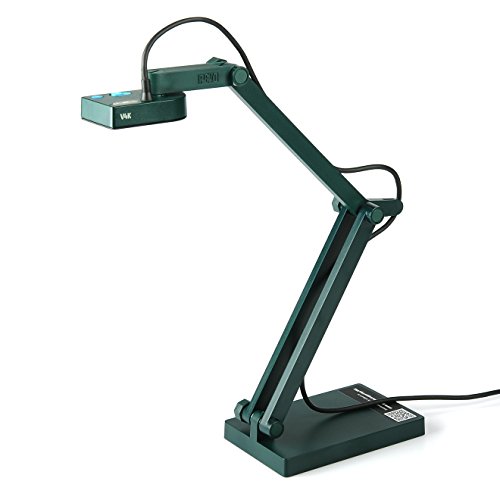
IPEVO V4K Ultra High Definition 8MP USB Document Camera — Mac OS, Windows, Chromebook Compatible for Live Demo, Web Conferencing, Distance Learning, Remote Teaching, Green
- High-Resolution Camera: 8MP Ultra HD live images
- Smooth Live Streaming: Up to 30 fps at full HD
- Fast Focusing: Minimizes interruptions during use
As an affiliate, we earn on qualifying purchases.
As an affiliate, we earn on qualifying purchases.
Building an Efficient Paper-Scanning Workflow
When the main task is processing stacks of loose documents, a sheet-feed scanner can reduce repetitive handling. Pages are drawn through the device automatically, making this format useful for administrative files, receipts, forms, correspondence, and research paperwork.
Before choosing one, examine the typical paper sizes, whether documents are printed on one or both sides, the average batch size, and the condition of the pages. Automatic feeding is convenient for ordinary loose sheets but may be unsuitable for brittle, torn, stapled, unusually thick, or irreplaceable originals. The guide to the best sheet-feed scanners for document management can help narrow the available approaches.
Prepare Before You Scan
- Remove staples, clips, and adhesive notes carefully.
- Repair or isolate damaged pages rather than feeding them automatically.
- Arrange documents in a defined order before creating files.
- Choose a naming convention that will remain understandable over time.
- Decide whether searchable text, page separation, or duplex capture is needed.
- Check sample scans before processing a large batch.
After scanning, confirm that every page is present, correctly oriented, readable, and associated with the proper file. Optical character recognition can make documents searchable, but recognized text should not be assumed to be error-free. Names, numbers, tables, handwriting, and poor-quality originals deserve particular attention.

Amazon Basics 8-Sheet High Security Cross Cut Paper and Credit Card Shredder with P-4 Security, Auto Shut-off, Black
- Cutting Size: 0.2 x 0.7 inches cross-cut
- Security Level: Meets P-4 standards
- Sheet Capacity: Shreds 8 sheets at once
As an affiliate, we earn on qualifying purchases.
As an affiliate, we earn on qualifying purchases.
Organizing and Preserving Digital Documents
Digitization is only useful when files can be found, understood, and recovered. A practical structure usually combines descriptive filenames, logical folders, metadata, and a backup routine. Avoid naming everything with vague labels such as “scan” or “document,” which become meaningless as the archive grows.
A filename might include a date, creator, subject, document type, or sequence number. Choose a pattern that matches how the collection will be searched. Dates written in year-month-day order sort predictably, while controlled names reduce duplicate spellings for the same person or project.
Keep preservation files separate from convenient access copies. For example, a larger master file can remain unchanged while smaller versions are created for email, websites, presentations, or classroom platforms. Access permissions should reflect the sensitivity of the information, especially when records include personal, educational, medical, financial, or legal data.
Authenticating Official Paperwork
Notarial work requires tools that support accurate, consistent execution of official duties. A self-inking stamp can make repeated impressions convenient, but the stamp itself is only one element of a compliant notarial process.
Requirements for wording, layout, commission information, seals, journals, certificates, and permitted acts vary by jurisdiction. A notary should verify current rules with the relevant commissioning authority before ordering or using a stamp. For equipment-oriented comparisons, consult the guide to the best self-inking notary stamps.
Check every impression for completeness and legibility, and protect the stamp from unauthorized use. Replacement should be considered when the impression becomes unclear or when commission details change. Product selection cannot substitute for training, identity verification, recordkeeping, or compliance with applicable law.
Securely Disposing of Sensitive Documents
Some documents should be preserved; others should be destroyed once their required retention period ends. Shredders support the controlled disposal of records containing personal information, student data, account details, internal business material, research information, or other confidential content.
A heavy-duty model may suit environments with recurring or high-volume destruction needs. Important considerations include the type and quantity of material, intended users, available space, operating routine, and the organization’s security requirements. The guide to the best heavy-duty shredders provides a dedicated overview of this category.
Equipment should be paired with a written retention and disposal policy. Staff need to know what can be destroyed, what must be retained, and who is authorized to make that decision. Never shred records merely because storage is inconvenient. Legal holds, institutional rules, tax requirements, research policies, and privacy obligations may affect retention periods.
Create a Complete Document System
The strongest document workflow is not built around a single device. It connects capture, presentation, organization, preservation, access, and disposal. A school might use document cameras for live instruction, a sheet-feed scanner for routine forms, a flatbed scanner for photographs, controlled storage for digital records, and a shredder for approved disposal. An artist or family historian may need a different combination.
Use this sequence when designing your system:
- Identify the material and its physical condition.
- Define whether the goal is presentation, access, preservation, authentication, or disposal.
- Select equipment that matches the material rather than forcing every task through one device.
- Create repeatable procedures for filenames, metadata, quality checks, and backups.
- Protect sensitive originals and digital files with appropriate access controls.
- Review the workflow periodically as collections, regulations, and teaching needs change.
Document tools are most valuable when they support a clear purpose. By matching the method to the material, protecting originals, verifying digital output, and managing each record through its full lifecycle, educators, researchers, artists, families, and professionals can build collections that remain useful, understandable, and secure.