
TL;DR
Prime for Young Adults — start your free trial
Fast free delivery, streaming and member deals for eligible 18–24 year olds.
Try it freeAs an affiliate, we earn on qualifying purchases.
The Old Farmer’s Almanac’s 2023 fall forecast predicts a mild, dry autumn for most of the U.S. The forecast, based on traditional methods, has generated widespread interest but remains a projection, not a certainty.
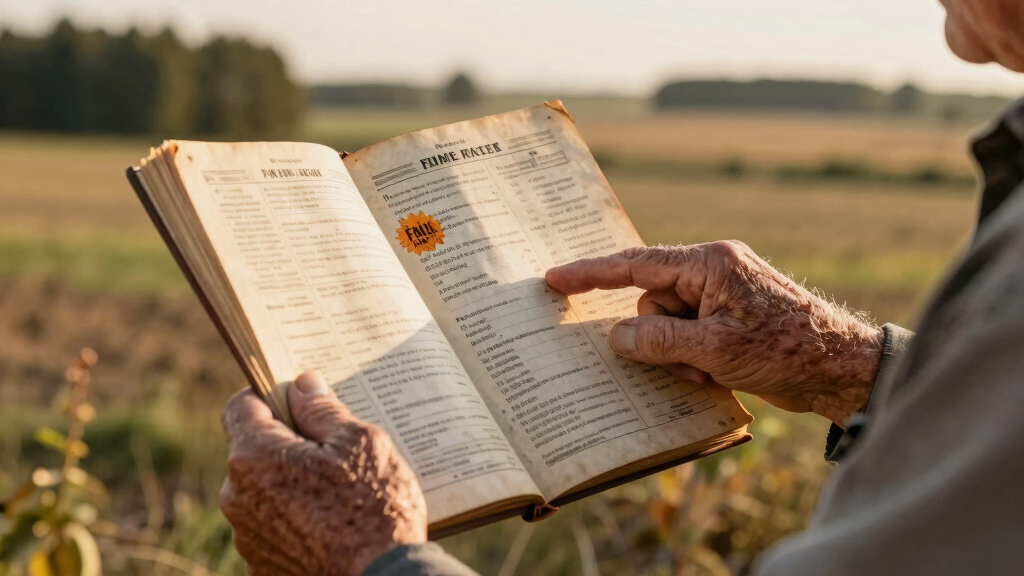
The Old Farmer’s Almanac has released its 2023 fall weather forecast, predicting a season characterized by mild temperatures and below-average precipitation in most parts of the United States. The forecast, based on traditional astronomical and climatological methods, is intended to guide farmers, gardeners, and outdoor enthusiasts but is not a guarantee of actual weather conditions.
According to the Almanac, the 2023 fall season will feature warmer-than-average temperatures across much of the country, with less rainfall than usual in regions including the Midwest, Southeast, and parts of the West. The forecast suggests that the Northeast may experience more variability, with some areas seeing average or slightly above-average rainfall.
The Almanac’s prediction is rooted in its proprietary formula, which combines astronomical data, solar activity, and historical climate patterns. The publication emphasizes that these forecasts are based on long-term patterns and should not replace local weather reports or forecasts from meteorological agencies.
Experts caution that weather predictions at this scale are inherently uncertain, and actual conditions may differ. The National Weather Service and other meteorological agencies have not officially endorsed the Almanac’s forecast but acknowledge that such traditional methods can sometimes offer useful general guidance.
Why the 2023 Fall Forecast Matters for Readers
The forecast’s significance lies in its influence on agricultural planning, outdoor activities, and energy consumption. While not a precise prediction, a forecast of a mild and dry fall could benefit farmers preparing for harvest and outdoor events. Conversely, it may impact water resource management and wildfire risk assessments in certain regions.
Additionally, the release of the Almanac’s forecast continues to sustain public interest in traditional weather prediction methods, which remain popular despite advances in meteorology. Understanding the forecast can help individuals and communities prepare for potential seasonal variations, even if the predictions are not guaranteed.
outdoor weatherproof garden furniture
As an affiliate, we earn on qualifying purchases.
As an affiliate, we earn on qualifying purchases.
Historical Trends and the Basis of the Almanac’s Fall Predictions
The Old Farmer’s Almanac has been publishing seasonal weather forecasts for over two centuries, relying on a combination of historical data, astronomical observations, and folklore. Its 2023 forecast follows similar patterns to previous years, which have historically shown some correlation with actual seasonal trends, though not with high precision.
In recent years, meteorologists have often viewed the Almanac’s predictions as interesting but not definitive. Modern weather forecasting relies heavily on satellite data, computer models, and real-time analysis, which generally provide more accurate short-term forecasts. Nonetheless, the Almanac’s seasonal predictions remain a cultural tradition and a source of curiosity for many Americans.
“While the Old Farmer’s Almanac offers a traditional perspective, it’s important to remember that weather can be unpredictable, especially over longer periods.”
— John Thomas, Meteorologist
As an affiliate, we earn on qualifying purchases.
Limitations of the Almanac’s Seasonal Weather Predictions
The main uncertainty remains that the Almanac’s forecast is based on traditional methods and long-term patterns, which do not guarantee specific weather outcomes. Actual conditions could differ significantly, especially in regions prone to unexpected weather events like storms or early frosts.
Additionally, the Almanac has not provided detailed regional forecasts, and local weather variability can override broad seasonal predictions. The scientific community generally regards such forecasts as interesting but not definitive.
As an affiliate, we earn on qualifying purchases.
Monitoring Actual Weather Trends in Fall 2023
As the fall season progresses, meteorological agencies will provide regular updates and localized forecasts. Observers will compare actual weather conditions with the Almanac’s predictions to evaluate its accuracy this year. Farmers, outdoor enthusiasts, and policymakers will adjust their plans accordingly based on real-time data.
Further analysis will be conducted after the season to assess how well the Almanac’s forecast matched the actual weather, informing future predictions and public expectations.
As an affiliate, we earn on qualifying purchases.
Key Questions
How accurate are the Old Farmer’s Almanac fall forecasts historically?
Historical accuracy varies; some years align reasonably well with actual conditions, but overall, the forecasts are considered broad and general, not precise predictions.
Can I rely on the Almanac’s forecast for agricultural decisions?
The Almanac’s predictions should be used as a general guide. Farmers should also consult local weather forecasts and climate data for critical decision-making.
What factors does the Almanac use to determine its forecast?
The Almanac combines astronomical data, solar activity, historical climate patterns, and folklore to generate its seasonal predictions.
Will the forecast change as the season progresses?
Yes, meteorologists will update weather forecasts regularly, but the Almanac’s seasonal prediction remains a long-term estimate, not a day-to-day forecast.
Source: google-trends
NFL season / tailgating Picks
team gear
As an affiliate, we earn on qualifying purchases.